
Introduction
Dealer Management System in Nepal: Bridging the Global Standards Gap, Nepal’s automobile industry is growing rapidly, but many local dealers and workshop companies still operate without a Dealer Management System in Nepal, making it difficult to meet growing customer expectations and rising competition.These dealerships and workshops are struggling to accommodate growth in consumer demand and competitive pressure. Developed markets have also made significant shifts to fully automated commerce and process and can immediately supply past data and productivity with AI enabled tasks to consumers.
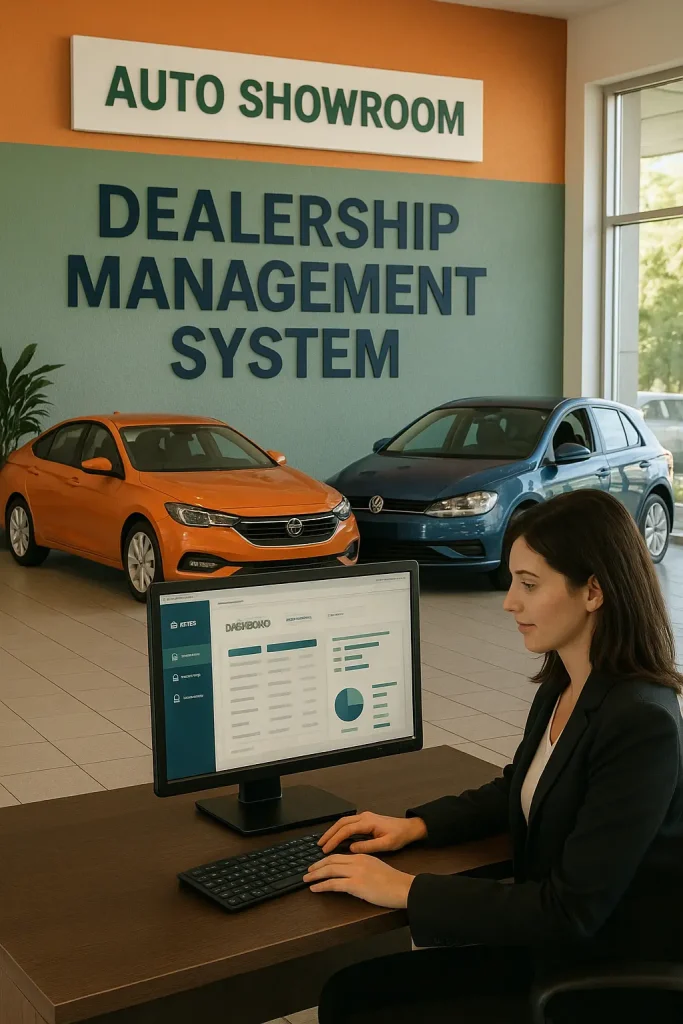
In Nepal many workshops and showrooms are still using expired billing software, separate records of sales and servicing, and are inconsistent with follow ups – which leads to slow service, poor organisation and loss of profit. These areas of improvement may not stem from a lack of potential, rather from a lack of tools and processes.
This is precisely the specific use case for localized Dealer Management Systems like Srifinity. Unlike foreign DMS software catered to European or US markets, a unique DMS in Nepal will consider the language, tax, infrastructure concerns, and workflow processes that are unique to dealers in Nepal.
Discover how Top Nepalese auto industries are increasing profitability and simplifying workshop operation.
This blog will dig into the limitations that dealers in Nepal are facing, how a simple local DMS can enhance business relationships and communication, and the real advantages dealers can realize by working with digital forms of business. Whether you manage a service center, multi-brand showroom or a used vehicle business, this blog will show you how to bridge future business scalability and growth affordability in your local market.
Problems Holding Nepali Dealerships Back
Many dealerships in Nepal have struggled to meet the growing customer demand and volume of sales. Inefficiency, rising costs and lack of customer engagement remain challenges for many dealerships. Here are the top challenges and how they impact your profits:
1. Manual Billing and Paper Job Cards
Any workshops still use handwritten bills/costing, or tracking work using Excel sheets or carbon copy pads. This results in:
- Inaccurate VAT calculations or entry errors on billed items.
- Slow service delivery times due to poor communication and tracking.
- Tax non-compliant invoices.
2. Inventory Chaos
Inventory is either:
- Requires too much capital tied up in overstock,
- For parts that you need the most, you’re out of stock.
- The consequence of poor inventory management create handy customer dissatisfaction, longer service turnaround times, misses and delayed sales opportunities.
These inefficiencies can be completely avoided with a Dealer Management System in Nepal that automates billing, VAT calculations, and job card tracking. Are you also losing stock through theft and waste opportunities without real-time tracking information?
3. No Customer Follow-Up System
The number one area that your dealership may be losing revenue to is lack of follow-up after a service or sale. Examples of missed reminders for:
Periodic service
- Annual insurance renewals
- Vehicle Registration/Date-based EMI support.
All these items could have represented future use of your service, and sales revenue.
4. Disconnected Operations Across Branches
Many dealers with multiple locations find it exceptionally difficult to synchronize any data across campuses, since there is no central governance, leading to poor organization and duplicated data leading to problems overall.
All of these problems create friction, diminish trust and mean lakhs of rupees lost every year, even in healthy businesses.
Why You Need a Dealer Management System in Nepal ?
A Localized DMS Built for Nepal
So how do you fix these problems?
Global DMS solutions are expensive and designed for western markets. The better option is a Nepal focused DMS, such as Srifinity, which knows your environment, currency, compliance and local working procedures.
1. Tax Support
A Dealer Management System in Nepal like Srifinity is built to handle local VAT, PAN billing, and IRD compliance without manual intervention.
Srifinity allows dealers to:
- Automatically calculate VAT, PAN, and government tax compliant formats
- Export reports to use for audits and review by the IRD.
This puts your business in good legal stead and reduces compliance headaches
2. Workflow Automation from Start to Finish
By employing digital job cards, service history, and automated billing, you have the potential to bypass delays and errors. With Srifinity, you will connect
- Customer profiles
- Spare part inventory
- Technician assignments
- Customer payment history
You will bring entire operations into one smart platform.
3. Automated CRM and Follow-Ups
Srifinity automatically:
- Sends service reminders via SMS or email
- Notifies customers when it’s time to renew their insurance
- Sends birthday and vehicle anniversary wishes
Even the small details provide a global-level experience for your customers which enhances loyalty and revenue.
4. Real-Time Reporting and Dashboards
Every day you will get live dashboards on:
- Daily revenue
- Profit/loss statements
- Employee and technician daily performance
- Pending payments
You get actionable information providing you smarter and faster decisions.
5. Cloud Access Across Locations
Whether you manage one workshop or ten, Srifinity:
- Works offline and online
- Syncs all data to every branch
- Provides owners mobile (with laptop remote access as well)
- Gives owners multi-location control under one roof.
It brings multi-location control under one roof.
The Result?
Better service, faster billing, fewer mistakes, happy customers,and most importantly, a greater profit.That’s why a Dealer Management System in Nepal, like Srifinity, is built to support Nepali regulations and customer habit
Real-Life Impact of Switching to a Local DMS
Let’s look at a real example:
Pawan Auto Care, a medium-sized service center in Chitwan, used to process over 25 vehicles per day, but had problems with slow invoicing and stockouts. After we transitioned them to Srifinity, here’s what changed in 3 months:
- Billing time went down from an average of 12 minutes to 4 minutes.
- Service repeat rates improved by 30% through reminders.
- Monthly revenue increased by 22% through upselling and better parts tracking.
- Paper consumption was down 80%, reducing printing and filing costs.
Most importantly, the owner can now monitor everything remotely on his mobile device, even when on the move!
Across Nepal, dealerships using localized DMS platforms are experiencing improved customer retention, faster processes and better controllability over their day-to-day activities. The gap between local and global operating environments is closing fast and we can help through technology.
Features and Benefits of a Local DMS
A Nepali DMS like Srifinity includes all the essential features your dealership would want if you were operating it from anywhere in the world:
Multilingual Interface
- Invoices, dashboards, and reports
- Great for local employees and government compliance
Real-Time Inventory Tracking
- Check stock levels and parts used by vehicle
- Set low-stock notifications
- See movement across branches
CRM and Customer Engagement
- Automated reminders for service, renewals, etc.
- Schedule SMS/email campaigns
- Customer history for upselling
Digital Billing and Tax Compliance
- Create VAT-compliant invoices
- Store digital invoices for audits or future records
- Bill digitally via print, email or WhatsApp
Smart Analytics and Dashboards
- See daily sales, revenue, and standing on dashboards
- Compare branches, employees, or services
Make decisions with real time data
Cloud-Based and Mobile-Ready
- Works on any device: phone, tablet, desktop
- Great for multi-locations businesses
Secure and Scalable
- Secure encrypted cloud backing data
- User role based access for employees
- Will grow as your business grows
These features don’t just make your life easier – they help you grow your dealership as if you were in a global dealership, while still being 100% Nepal-ready.
Conclusion
The gap between global and local performance is not the result of a lack of effort – the reality is that Nepal lacks a credible Dealer Management System which understands local business realities. The disparity between Nepali dealerships and global standards is not a permanent gap, it is a technological one. What global dealers have achieved through automation, CRM and analytics, you can now become too, through tools like Srifinity’s localized DMS.Only those who implement a Dealer Management System in Nepal will remain competitive and scalable in the coming years.
Instead of trying to adapt expensive foreign software, invest and deploy a system that is designed with respect to Nepal’s legal system, language, and operational environment. Local DMS will enable you to use digital invoicing, automated follow ups, cloud based access, to digital dashboards delivering real-time management information and limited carbon footprints.
As vehicle ownership and service expectations escalate across Nepal, only the dealerships that invest in and embrace technology as part of their entire operations will remain profitable, scalable and customer centric.
Ready to close the gap and go digital?
Visit Srifinity.com to schedule your free demo.
FAQ
Q1. What is a Dealer Management System (DMS)?
A DMS is a piece of software that allows auto dealers to manage billing, inventory, service, customer relationships, and performance tracking, all in one place.
Q2. Why do dealerships in Nepal need a local DMS?
Local DMS solutions, like Srifinity, support Nepali language, VAT billing, and offline access – all things missing in global platforms.
Q3. Is Srifinity DMS good for small workshops?
Srifinity DMS is made for dealers of all sizes. We have affordable pricing plans that make it easy to onboard the DMS.
Q4. Can I access my DMS from my phone?
Yes. Srifinity is cloud-based and mobile friendly, you can manage your business on-the-go.
5. Will it help me increase my profit?
Yes. Most of our users see 10-30% improvement over revenue within weeks by speeding up responses and automating follow-ups and improving data accuracy.
Leave a Reply