



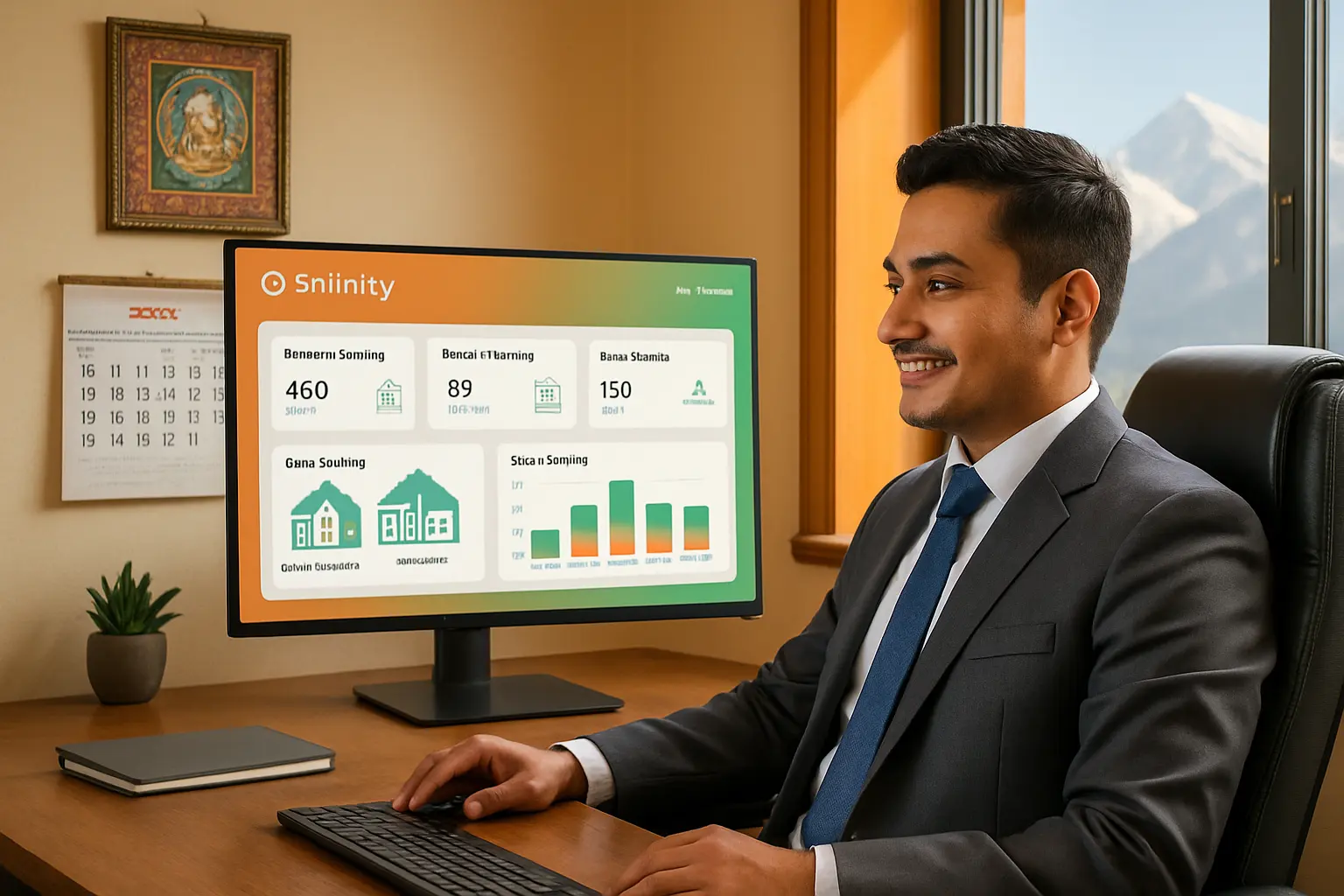
CRM in Real Estate: Revolutionizing Client Relationships and Sales
Introduction
The real estate sector, at all levels and throughout the world, is known to be fluid and highly competitive. Daily business can be challenging for all professionals in all dimensions of the real estate industry, be it individual agents, brokers, or very large property developers. The complexity of managing a constantly growing portfolio of properties to list, nurturing the many complex relationships, and navigating a variety of sales pipelines can consume a real estate individual’s day. This complexity is compounded by the volume of data we handle, and the necessity to devote time to personalize each and every client relationship we build, which is where the inefficiencies arise. Unfortunately, if we do not find a better way to manage our workloads, we will miss opportunities, and operate a fragmented and slow business operation.
As competition increases in this saturated real estate landscape, it is important to help simplify operations so we can increase our overall volume of client engagement and sales. This is the space where a CRM (Customer Relationship Management) system provides necessary efficiencies. When implemented properly, CRM systems can change how individuals manage their daily tasks, as it becomes the focal point and hub for all client activity and engagement processes. In this article we are going to explore CRM in the real estate sector, its capabilities, the issues that CRM solves for professionals, and the perks of using proper CRM systems in real estate. Furthermore, we will examine how a dedicated CRM support company like Srifinity plays a crucial role in optimizing these systems, ensuring seamless integration and maximizing their potential for real estate businesses.
What is CRM in Real Estate?
Customer Relationship Management (CRM) generally, with respect to business principles, relies on technology or strategy to assess and oversee customer interactions and data through the lifecycle of the customer; with a view to enhancing business relationships with customers, improving customer retention, and driving sales growth. In a real estate context, CRM adapts to the specific and unique requirements of property sales, rentals, and effective client management by centralizing and recording, structuring, and tracking the interaction on a central platform for client contacts with potential and existing clients.
For real estate agents, a CRM is more than an address book or contacts database. It shows how you (the agent) interact with your clients through their entire buying cycle. For example, a CRM can allow agents to track leads through all the phases of the buying cycle: from inquiry to conversion; allowing an agent to store and track potential clients, to make sure no potential clients fall through the cracks. In addition, the use of CRM for property viewings allows for appointment scheduling, reminders to agents and clients and to track feedback on property viewings. Furthermore, once property viewings are completed, CRM allows for follow-up interactions via automation – such as a personalized email after visiting a property or contact for new property listings fitting a client’s search criteria, or contact a client during significant personal milestone (e.g., a birthday) for long-term effective client management, etc.Centralizing this information and automating several processes gives real estate CRM the ability to allow professionals to maximize their ability to have real conversations and close deals.
Challenges in Real Estate Without CRM
Although the real estate industry has a great chance to thrive, it also has challenges. especially for agents without an effective CRM. In summary, their issues typically look like missed opportunities, proficiencies, and a sense of organization and ultimately put a dent in profits and future business. You need to know the pain points to understand how a CRM relieves those pain points.
One major challenge is simply losing potential purchasers due to missed follow ups. Especially in a competitive market, leads can go cold very quickly. Without a way to follow your contact and re-establish the engagement, agents have the option of a state of ignorance or state of shame and loss sales. Agents forget to contact interested parties, due to the number or silos of inquiries, and subtle nuances in personalizing communications and keeping notes to side step information overload when relying on notes, formats, and messy spreadsheets.
Another challenge has poor record keeping tour disorganization of listing properties and client notes/follow up. Picture an agent with several dozen properties to sell, each with a differential in features, precise condition, availability to show or consult the purchase of a property, and the interest of clients. It generally gets confusing. Think how many clients have they lost or interests mis-communicated or even checking if perhaps they may fit or prioritize their interest. If an agent has any or all of those situations and doesn’t have a useful database that is all in one action item, they typically miss, lose or can completely forget about a client’s interest.
Client information, contact information, communication history, property expectations, and financial qualifications can also be distributed across notebooks, emails, and dozens of digital documents. A “big picture” view of every client’s unique situation is almost impossible.
Tracking and managing multiple deals and negotiations is challenging for many agents. Real estate transactions are multifaceted, with a myriad of stages, players, and deadlines. If agents do not have a clear view of where deals are at, they would lose important milestones, leading to expensive delays, errors, and even lost deals. Additionally, failure to track progress through a deal may inhibit agents’ ability to strategically negotiate terms with other parties, as they do not have access to information that would enhance deal strategy.
Ineffective communication among sales teams is another challenge many agents face. Larger agencies with many agents in the same area may have agents working with the same client, on similar properties, at the same time. While this is a terrific position for an agency to be in, it will also create silos of information when there is no effective communication, and all data is only accessible to the few agents involved. A tangible example of this occurs when multiple agents give the same client advice about the property they are selling (e.g., choose A vs. B), while the agents have not spoken in (or have yet to) agree on a common solution; not only does this frustrate the client, but it also diminishes agency efficiency and agent satisfaction.
The inability or challenge to quantify marketing ROI (Return on Investment) blinds real estate professionals to whether actual marketing money spent is effective. Without a CRM, it is very difficult to link leads and sales to specific marketing programs or campaigns. Without any way to measure, it is virtually impossible to optimize marketing efforts which only leads to lost money on marketing channels that are unproductive and missed opportunities to scale up things that work. This identification of collective challenges illustrates the importance of having a systematic, integrated program like CRM to organize, streamline, and strategize your real estate business.
How CRM Solves These Challenges
After examining potential hazards of real estate personnel without a CRM, we will take a look at how a CRM can help alleviate some of these challenges by taking the inefficiencies above and turn them into competitive advantages. When a CRM is implemented effectively, it can be the central nervous system of a real estate business that ties data together, enables automation, and improves communication.
One of the biggest advantages of CRM is a centralized client & property database. This is probably the biggest benefit of having a CRM. Rather than having client information spread across several different places, a CRM will have every detail of a client,we are talking every contact piece of information, every communication history, each piece of property they are interested in, any financial pre-qualifications, and even personal notes all in one easily accessible location. Likewise, all of the property listings – their specs, availability, photos, viewings – will be organized for you. No matter what real estate system you are using, every staff member has access to the same updated, current property information. Having a centralized client profile alleviates any inconsistencies and allows for better decision-making. Being able to view both the clients and properties-enhanced data point gives agents the ability to immediately match potential buyers with appropriate listings, and decreasing the duration of searching for properties increases the magnitude of client satisfaction.
As we mentioned before, CRM allows for automated reminders for follow-ups and property viewings.
The issue of not making follow-ups, a significant source of lost leads, is addressed well. It is possible to set up automated reminders in the CRM system that will be sent to the agents regarding scheduled calls, emails, or property visits. They are also able to send automated notifications to clients, say a confirmation of appointment, a questionnaire to the customer after a viewing or an update of new properties as per their specification. Automation helps retain the engagement level consistent and the leads are kept warm with freeing up the time of agents to do more complicated tasks that involve contact with humans.
Thirdly, CRM allows one to work with marketing instruments (email, SMS, WhatsApp). With the modern CRM solutions, the real estate professionals can easily be able to conduct a targeted marketing campaign within the platform through the seamless integration with different communication channels. This implies that agents can mass-send new listings, SMS upgrades with personalization and even oversee WhatsApp conversations with customers without leaving such activities on the CRM. Such a combined initiative will allow consistency, monitoring, and relevance to the preferences of the clients, resulting in an increase in engagement rates and quality leads.
Fourthly, CRM provides a real time reporting of sales pipelines together with property performance. The dark deal tracking through lack of CRM is changed to open, usable information. CRM dashboards allow seeing the whole picture of the sales funnel with its deal statuses, scheduled dates to close them, and possible obstacles. Key performance indicators (KPIs) that can be tracked by agents and managers include lead conversion rates, average deal size, and the length of the sales cycle. Such real time data assists businesses to recognize bottle necks, predict the sales and make appropriate decisions using the data in strategic optimization of the sale strategies. Moreover, the information on the performance of properties can be used to derive which properties are attracting the most clicks so that the future purchases and marketing activities could be based on such indications.
Lastly, the problem of measurement of marketing ROI has been conquered by using CRM because it presents pervasive analytics. CRM systems are also capable of measuring and attributing sales to particular marketing efforts through measuring the origination point of each lead as well as the path they take through the sales funnel. This will help the business identify the best channels to use and real estate businesses will be able to spend their marketing budget more effectively and thus get the best returns on investment. Basically, CRM will turn chaotic, reactive real estate into an efficient, structured and proactive operation.
Key Features of a Real Estate CRM
It is important to break down the key functionalities of a CRM that can be in use in the real estate organization to get a complete picture of its usefulness in this sector. Although certain functions might differ across CRM providers, an effective real estate CRM normally encompasses a set of tools to automate the business process, develop the customer relation, and increase sales. The following are the most important features that real estate agencies ought to consider:
Lead and Inquiry Management: This is how any real estate deal normally begins with. A CRM tool ought to provide the facility to acquire leads through online or offline media, such as website form, social media, property portal, open house and direct inquiries. When leads have been captured, they should automatically get an agent, their origin and follow-up possible in real-time. More advanced functions may be a lead score which may help prioritize the best leads based on their propensity to convert, and lead nurturing workflows that can be set to automatically follow up after original communications.
Property Listing Management: In case of real estate businesses, real estate is its main stock. A CRM should have an all encompassing module to handle any line of property listing. This will consist of the specifics of a given property (address, kind, size, amount of rooms, amenities), quality of photos and virtual tours, rates, availability, and past data. Easy updating, classifying, and searching through listings make the operations efficient and the speed at which clients are matched.
Client Communication Tracking: The most crucial thing in having fruitful client relationships is communication. The CRM ought to record all communication with a customer regardless of whether this is a phone call, an SMS, an email or even a note of a meeting. This brings about a full communication history so that whichever agent moves on the next issue, there would be no disturbance of communication to a client. This is improved by features such as built in mail-clients, and call-logging, and SMS support, all within the CRM itself.
Task and Appointment Scheduling: Real estate agents also have tight schedules consisting of meetings with clients, visits to properties under inspection, and appointments which include inspection and administrative duties. An integrated CRM that incorporates a calendar and task management options will help the agents to schedule an appointment, create reminders and manage everyday to-do lists. This aids in preventing no-shows and also guarantees timely accomplishment of critical engagements thus leading to better productivity.
Sales and Deal Tracking Dashboards: The real estate sales pipeline may be lengthy and complicated. A CRM includes visual dashboards that gives an easy to understand view of all the current deals, their current state (e.g. lead, qualified, showing, offer, pending, closed) and when they are likely to close. This will enable monitors and managers to gauge progress, areas of bottleneck and be able to predict sales more accurately. Configurable dashboards can show the important metrics that are of relevance to the business conversion rates, mean deal value and agent performance.
Storage of Documents on Contracts and Agreements: One of the major portions of real estate is paperwork which involves contracts, agreements, disclosures and financial documents. A CRM must provide cloud-based locker facilities that enable the agents to deposit, sort and access these important documents anywhere. Abilities to share and perform version management are also essential so that all stakeholders have the latest copies of documents.
.
The combination of these respective features forms a potent ecosystem that will help real estate professionals to address their business and establish closer relations with their clients and eventually resulting in increased levels of sales.
There are numerous advantages of adopting CRM systems that are beyond the aspect of mere operational efficiency that can have a severe impact on the growth and profitability of real estate agents/developers. Such benefits are converted into a more competitive advantage, higher client satisfaction and in the end, greater revenue.
Benefits of CRM for Real Estate Agents and Developers
The adoption of a CRM software installation is a shortened lead-to-sale conversion, which is one of the most direct and profitable. It is majorly through centralization of lead data, automation of the follow-ups, and ensuring that the agents have access to the complete picture regarding the preferences of clients that CRM reduces the sales cycle dramatically. Agents will be able to respond faster to queries, cultivate leads more effectively and make property presentations that are more to the liking of the clients and they will move more quickly towards decisions and closed transactions. This feature allows the employee to focus first on the hot leads and automates initial contact to eliminate the possibility of losing valuable opportunities because of tardiness.
There is also improved customer experience and satisfaction as a result of CRM. Client satisfaction is the most important thing in the industry that is all about relationships. A CRM allows individual response and active support. Agents will be able to recall the anniversary dates of their clients, provide appropriate information about properties and follow up on the demand according to earlier discussion. Such a degree of attention develops a sense of trust and loyalty transforming a one-time client to a recurrent customer and strong source of referrals. Clients will become much happier when they know they have been heard and appreciated, and good word-of-the-mouth and a better brand image take place.
Moreover, it has been seen that CRM doubles sales productivity. CRM helps to automate administrative duties like data input, scheduling, and sending emails, which in turn liberates the agents to concentrate on high-value tasks such as attending meetings with clients, taking them on property tours, and client negotiations. Agents will be able to equip themselves to meet with clients more effectively since all the information about a customer is within their reach so that little time is lost searching or scrapping when an agent meets a client. With such an increase in productivity, the agents would be in a position to deal with more leads and transactions without any compromise to service delivery.
Choosing the Right Real Estate CRM
The choice of the best CRM system available in the market to fit your real estate business is a very important move that can go a long way in determining how efficient your operations are and your growth pattern. Among the abundance of options, it is vital to take a couple of aspects into consideration so that the solution one takes fits ideally their particular needs and long-term purpose.
Upon examining the issue of CRM support, such companies as Srifinity are involved in assisting real estate companies with the implementation, customization, and optimization of the CRM systems. They may prove to be very useful in cutting through the red tape of CRM selection and provide a hassle free integration experience. The support that you receive at Srifinity would assist in streamlining the CRM to suit your specific work and can also train your staff on using the CRM effectively as well as continuing to assist in a technical support capacity so you can get the most out of your investment on your CRM.
Last but not least, mobile accessibility to the on-site agents can hardly be overestimated. Agents in real estate rarely have time to sit. They show houses, meet their customers and host open houses. An effective CRM that includes a well-developed intuitive mobile app will enable an agent to determine important data, modify client profile, plan a visit, and call a lead with the help of a smartphone or a tablet. This will see to it that the agents are able to continue being productive and prompt, wherever they might reside and give real time updates and improve on the service to the customers.
With regards to CRM support, businesses such as Srifinity have specialized in assisting other businesses especially real estate businesses in implementing, customizing, and optimizing their CRM solutions. They may be invaluable sources of experience when it comes to dealing with the ins and outs of CRM selection, and the rules of smooth implementation. The support offered by Srifinity has the potential to customize the CRM according to your individual work processes, train your staff, and offer continuous technical support so that you can gain the best utilization of your CRM investment.
Conclusion
Customer Relationship Management (CRM) system is not just a luxury anymore but a realised strategic must in a competitive and data-driven real estate market. As discussed, CRM solutions provide an all-embracing solution to most of the long-standing issues that come to be in the life of real estate agents, brokers, and property developers, including incomplete data reports and follow-up, ineffective sales functions, and absence of marketing analytics.
Gathering the data of clients and properties in one location, automating the daily tasks, increasing communication, and offering real-time analytics can help the real estate professionals work more efficiently and effectively than ever. It improves client relations by creating individual relationships and generally sales will be faster since decisions that follow lead to buying, and also overall sales productivity will soar. This will be ultimately reflected in sustainable growth and acquisitive competitive advantage with the capacity to make data-driven decisions and optimize marketing activities and deliver high-quality customer experiences.
Another important thing is to select the proper CRM and provide its optimal use. This is the aspect in which special CRM support agencies such as Srifinity can be of great help leading the business through the selection, customization, and support phase. The decisions to embrace CRM are a long term investment to the future as they will help real estate businesses not only to survive on the modern market but also to succeed long-term, establishing sustainable relationships with the clients.
FAQ Section
- What real estate agents would consider as the best CRM?
It depends on a large scale on these factors, that is, individual requirements, budgetary requirements and features necessary. Universal CRM such as Microsoft Dynamic365 CRM could also be tailored to use in the real estate realm, particularly large teams with more complex needs. By selecting it, one should keep in mind such things as the comfort of use, availability on mobile devices, integration verses with other platforms (e.g., MLS, property portals) and customer support level.
- How much does a real estate CRM cost?
Real estate CRM ranges highly depending on the vendor and features it combines, the number of users, and the support level. Pricing is free or starting around $20 to as high as hundreds of dollars per month depending on whether it is aimed at individual or team type work or a more enterprise -wide style program. A lot of CRMs will have tiered pricing which will enable companies to increase their investment as their needs expand. The overall cost of ownership should also be taken into consideration, which may include setup fee, the costs of training and follow up services.
- Will it be possible to incorporate CRM with property listing sites?
Yes, CRMs have today on the modern real estate market, strong integration options with the property listing websites and Multiple Listing Services (MLS). The syndication of your listing in the CRM to other sites is automatically done; therefore saving time and consistency. On the other hand, the leads that come through the listing websites will have the capability to automatically be captured and imported into your CRM as new leads and your lead management process will be a breeze. Be sure of the available integrations in a particular CRM, before making any commitment.
- What can CRM do to help the small real estate agencies?
Absolutely. Although the needs of the larger agencies may be more complicated, small real estate agencies can use CRM more than ever before. A single agent can utilise CRM to manage and keep track of leads, automate follow-ups, client data organising and deal tracking. In the case of small agencies, CRM may provide the opportunity to compete on equal footing with larger firms by offering the predictable process of addressing the clients and selling them, which eventually results in better productivity and growth without the involvement of large administrative areas.
Leave a Reply