Category: Uncategorized

  • Revolutionizing the Wheels: How ?

    Revolutionizing the Wheels: How ?

    How CRM Can Drive Sales and Success in Nepal’s Automobile Industry

    The automotive industry in Nepal is in the midst of a transition from traditional combustion engines to electric vehicles (EV) – growing from 2.49% in 2020, to 67.52% in 2024 for the growth of EV imports. However, this transition brings with it challenges: macroeconomic instability, underdeveloped EV infrastructure, high loan interest rates, policy uncertainty, and a lack of trained EV technicians. 

    In addition to these challenges, one major area that often gets ignored is customer engagement. Most dealerships and workshops do not have an integrated Customer Relationship Management (CRM) system, which puts them in the dark to capture sales, retention and growth opportunities. 

    The Problem: Automotive Businesses Without CRM Are Flying Blind

    Without an integrated CRM, many dealerships in Nepal are operating on old technologies such as excel spread sheets, paper logs, and silo forms of ringing technology, which causes many problems:

    1. Fragmented Customer Data

    Different departments manage customer information separately which leads to fragmented customer journeys with a lack of visibility. For example: a loyal customer may have alternate preferences for service with inconsistent service quality; or a well-informed sales representative, with training provided, who misses an upsell opportunity to another integrated provider.  

    2. Lost Leads

    Any interaction or inquiry with the dealership, face to face or otherwise, gets missed, if just one of the channel interactions doesn’t get input to the system. Also, if the inquiry isn’t tracked, it gets missed, the lead cannot be interpreted or followed up on.

    3. Inconsistent Sales Processes

    Sales reps also follow their procedures independently from each other which could slow down conversions and, on a larger scale, defects in professionalism and customer experience. The trust the customer gives when engaging with the dealership does not hold as the normal processes are not followed.

    4. Transactional Relationships

    In a world where there is no system to ensure long-term engagement all post sale interactions are doomed to be transactional. This missed opportunity is not just a lost sale opportunity but could mean a missed opportunity to sell service packages, loyalty programs, or upselling.

    5. Poor After-Sales Support

    Without history to take advantage of customers don’t receive timely service reminders, appointments are harder to keep track of and customers face delays. Customers also face frustrations around complaint timeframes as it is impossible to keep a complaint resolution time in check. 

    6. No Market Intelligence

    Sales, marketing, and service teams work in completely independent silos. Without a shared platform the speed of response is delayed and lost opportunities are never tracked.

    7. Disconnected Teams

    A CRM is not just software. A CRM is a mindset that is customer first. For clarity, here is how a CRM can assist with paint points around engagement and retention:

    The Solution: How CRM Transforms Automotive Businesses in Nepal

    A cRDM will centralize all customer data – their purchases, service history, what they like, what they don’t, communication logs, etc. into one platform and view allowing customer interactions to be fully personalized.

    1. Centralized Customer View

    A CRM defines and tracks the sales stages for each business from enquiry, test-drive, quote, and deal close in order to find any bottlenecks in the sales process. Every team is aware of the stages of the process. Managers can now see how many deals are in the pipeline, with the right people tracking its progress across the stages, and forecast more accurately.

    2. Seamless Lead Management

    CRMs automatically acquire leads from websites, social media, and walk-ins, allocate those leads to sales reps, and automatically follow-up on every single inquiry. 

    3. Standardized Sales Funnel

    CRM also defines and supports consistency across teams for sales stages — inquiry, test drive, quoting, closing the deal meaning that managers can track pipeline progress in stages, see where any bottlenecks occur, and more accurately project next steps.

    4. Long-Term Relationship Building

    Having CRMs automate birthday messages, service reminders, loyalty offers, and feedback reminders extend engagements with customers that started with a sale. 

    5. Efficient After-Sales Support

    Every service event associated with the specific vehicle is logged. The CRM will set and issue automatic reminders related to regular maintenance or warranty renewal which keeps the customers’ vehicles performing at their finest, and gets them to return for service. 

    6. Real-Time Analytics and Insights

    CRMs offer a variety of automated reports – from the best-selling models to ROI on marketing campaigns, CRMs are excellent in delivering the data in reports that allow people to make better decisions, faster – especially in an EV conversion period.

    7. Cross-Team Collaboration

    Sales, service and marketing teams share the same playbook. When you’re aware of how you’re customers journey’s are unfolding, you’re able to respond faster, and more strategically.

    Real-World Impact: How CRM Drives Results

    • Greater Conversion Rates: Automated follow ups + tracking leads, transcends drop-off from initial contact to completed transaction, and more visitors into the showroom.
    • Stronger Loyalty: + Repeated purchases/ referrals improves engagement personalization and customer satisfaction attitudes.
    • Better Inventory Management: Demand forecasting in CRM’s pre-determines models needed ‘in stock’, mitigating issues of excessive inventory over stocking.
    • Faster Decisions: Dashboarding and analytics can easily show you what’s actually working and where you’ll need to change your strategy.

    Implementing CRM in Nepal’s Auto Sector: Best Practices

    1. Choose the Right CRM

    Choose a local cloud-based CRM that can be set up to suit your own business processes, taxes, and language. Integrating with your DMS, billing, or inventory software is a bonus. 

    2. Clean and Migrate Data

    Prior to going live, clean up any old customer records. Determine whether to import all of the data you have, or start fresh. Check and validate every record so that data accuracy is confirmed.

    3. Train Your Teams

    Deliver role based training to your sales, service, and marketing teams so they understand how to use the CRM, and that it makes it easier for them to complete their work and meet their goals.

    4. Roll Out in Phases

    Implement a pilot program with one branch or team so you can more effectively gather feedback and refine workflows as you scale it up. Doing so will allow you to better understand comparisons to your historical indicators, so you can be less disruptive.

    5. Localize Where Needed

    Remember to localize it, for example you can include options in Nepali, map specific sales taxes, and registrations, while being compliant with your local authorities.

    CRM in Action: A Nepali Dealership’s Transformation

    Consider the example of a mid-sized motorcycle dealership in Kathmandu that struggled to convert leads and followed up poorly. After launching a locally built CRM:

    • Lead conversion increased by 40%
    • Booked repeat services increased by 60%
    • Customer satisfaction scores improved from 3.2 out of 5 to 4.6 out of 5
    • Word-of-mouth referrals nearly doubled.

    This isn’t simply about efficiency – it’s business transformation.

    Conclusion: CRM is the Road to a Smarter Auto Industry in Nepal

    Nepal’s automotive sector is at a critical turning point either to stagnate or to develop on the grounds of a more customer-centric and data-driven future. CRM is not just a tech upgrade; it is the steering wheel for that journey.

    It connects every functional area, every customer interaction, and every vehicle on the road. CRM removes fragmented processes and educated guesswork, thereby allowing dealerships and service centers to make more informed decisions, provide superior customer experiences, and ultimately earn more revenue especially in a competitive market driven by electric vehicles.

    For Nepal’s dealerships, it is not merely a case of surviving and adapting to CRM; they will need to graft to thrive.

    FAQs

    Q1. Is CRM expensive for small dealerships?
    Not necessarily. There are economical cloud options that can scale to your business. The ROI from improved lead management and customer retention is generally more than the cost.

    Q2. Can CRM work with our existing DMS?
    Yes. Almost all modern CRMs are capable of API integration with your dealership management system, accounting tools, inventory tools, etc.

    Q3. Do I need technical expertise to use CRM?
    No. Most systems are easy to use. With proper onboarding and support, even the non-technical staff can use it confidently..

    Q4. What’s the difference between CRM and DMS?
    CRM deals with customer interaction and the sales lifecycle and DMS deals with operations: inventory, billing, workshop management, etc. When joined up they provide a complete solution for the business.

    Q5. How soon will I see results from CRM?
    Most dealerships will see improvement in lead follow up, sales processes, and customer interactions within 1-3 months of a proper implementation process..
  • Still Printing Invoices in 2025? Use DMS

    Still Printing Invoices in 2025? Use DMS

    Here’s Why That’s Costing Your Auto Workshop Sales

    The Silent Sales Killer in Nepal’s Auto Industry

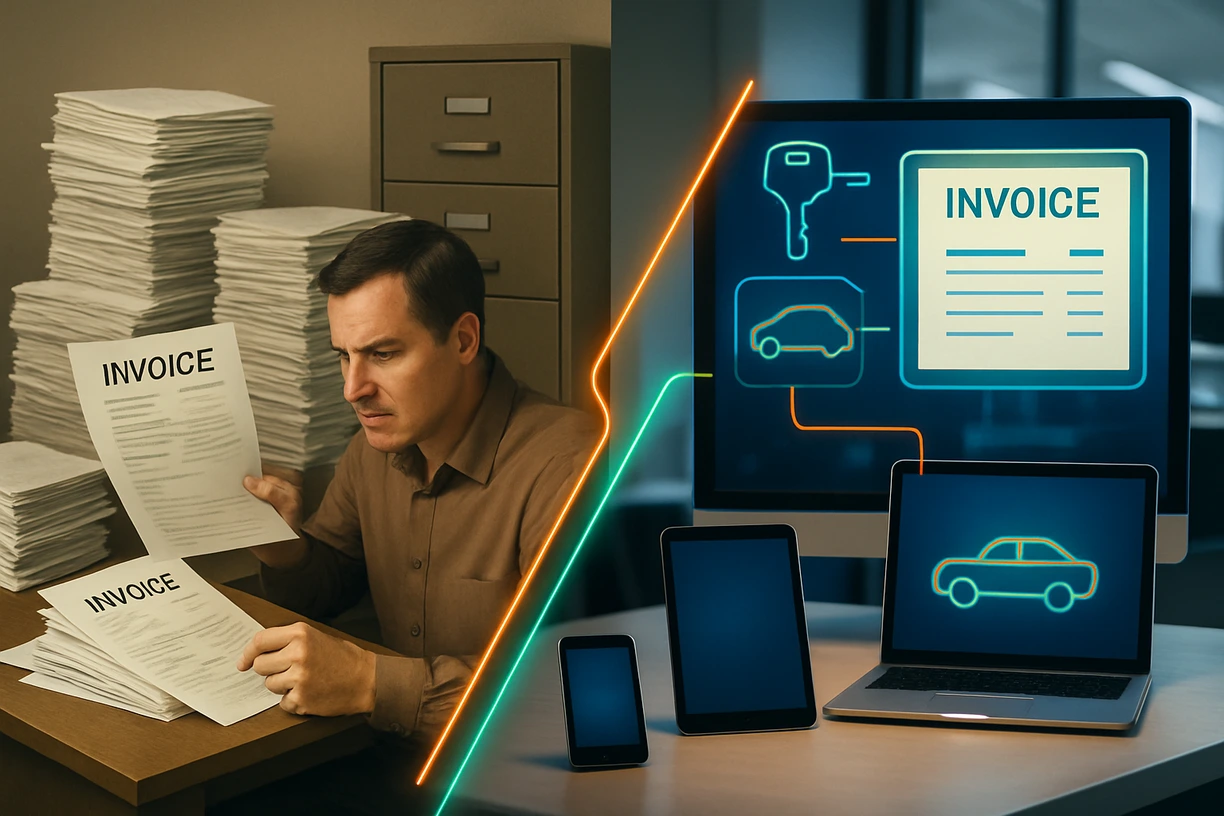
    The year is 2025, and even though digital transformation has impacted almost every industry, many automotive shops and showrooms still have manual billing systems and printed invoices, which might seem “normal” or even comforting. However, the use of paper invoices is a significant business risk. To repeat, using paper invoices places a damper on your operations, creates customer confusion, increases human error, and damages your brand in an online first world.

    Today’s consumers are accepting of online reminders, tax-compliant invoices and digital records. Manual operations are none of these. Manual operations make you look like you are outdated.  Customers may become disappointed with your services and choose to take their business to someone else, costing you losses. Manual operations may also come with the risk of fines from tax authorities, especially if laid down in official policy.

    A Dealer Management System (DMS) such as Srifinity contributes to eliminating product and service issues with smart, efficient and digital invoicing applicable to the Nepali automotive market. It can manage everything from VAT compliant bills to issue reminders and track customer history and service. Digital transformations are not just another trend, they are a sales tactic. If you are still printing invoices, you are not just behind, you are leaving profits on the table.

    How Printed Invoices Hurt Your Business 

    1. Wasted Time

    Invoicing consumes your most precious resource: time. Handwriting bills, inquiring about past records, manually calculating tax all of these tasks reduce your team’s productivity. On average, auto service staff spend 1.5 hours every day on invoicing. That adds up to more than 40 hours every month per staff member—one whole week wasted on paperwork! 

    2. Human Errors

    By handwriting or Invoicing on paper oris also fraught with errors: typos, wrong services entered, miscalculated VAT, missing items. Mistakes in your invoicing can:

    • Confuse customers,
    • Delay payment, 
    • Trigger tax penalties,
    • Destroy your business’ reputation!

    3. Poor Customer Experience

    Without digital records you cannot:

    • Track the history of customers’ services,
    • Send automated service reminders,
    • Customize offers or upsell your services.

    4. Legal & Tax Compliance Risks

    By 2025, the government of Nepal is digitizing its VATS and PAN tracking. Invoicing using paper methods is risky and can lead to poor decisions:

    • Non-compliant invoice formats result in fines,
    • Audits can be prolonged and may lead to missing entries,
    • Tax reporting can become an operational nightmare!

    5. Branding Damage

    A present bill says something about your business. With digital receipts, your competitors are able to send a receipt with their logo, QR code, payment links, and those sorts of things, and look modern with it while you send a paper invoice which implies you are behind the times. Customers associate digital processes as modern, professional, and trustworthy.

    Why DMS & Digital Invoicing Change Everything 


    Enter Srifinity’s Dealer Management System

    A modern DMS like Srifinity is made for Nepali garages, workshop, and showroom so that it automates your invoicing process 100% automated from the beginning of service booking to tax reporting

    • From service booking to tax reporting
    • From printing to digital storage
    • From VAT calculations to customer follow-ups

    1. Smart Invoicing

    In just a few clicks, you can create: 

    • Branded invoices with your logo
    • Auto-calculated VAT & PAN compliance
    • Bills in English or Nepali
    • Digital delivery via SMS/Email

    2. Instant Access to History

    Every interaction you had with the customer is stored in the database, and service history, previous bills, new follow-ups, etc., all can be very easily accessed without the hassle of shuffling through paper files. 

    3. Integrated Follow-Ups

    Automated reminders for service due dates, pending payments, or even  service reminders to the customer amongst others; the alerts can come via text or email and provides a significant boost to retention and satisfaction.  

    4. Performance Tracking

    You can get analytics built in and look at your sales trends, see what your most performing services were, and become knowledgeable about your customers by using these data to grow your garage, workshop and showroom intelligently and sustainably. 

    5. Staff-Friendly Design

    I know your thinking your team can’t handle it; Srifinity is:

    • Designed for non-technical users
    • Includes Nepali language support
    • Offers full training and customer care

    The Outcome?

    More time, fewer errors, better branding, and more returning customers. All with one affordable, scalable tool.

    Features of Srifinity’s Digital Invoicing System 

    Core Features:

    •  Automated VAT & Tax Calculations
    •  Professional Invoice Templates with logo
    •  Multilingual support (English/Nepali)
    •  Instant digital delivery with SMS & Email copy
    •  Customer by customer invoices archive in real-time
    • Customized branding (Pan, QR codes, contact information)

    Customer-Centric Tools:

    • Service Reminders: Fully automated follow-ups
    • Payment Tracking: View paid vs unpaid
    • Sales Dashboard: View what services are working
    • Customer Database: Look-up by vehicle, number, or service date

    Business Benefits:

    • Save 1 week/month of manual work
    • Reduce human error by 95%
    • Cut annual invoices costs by more than NPR 100,000
    • Instantly have a better brand impact

    Srifinity brings world-class digital tools to every garage, big or small, at a local price.

    Conclusion

    Print Less, Earn More

    If you’re still doing task manual or printing invoices in 2025, you’re not just wasting paper; you’re wasting time, money, and opportunities. Customers now expect a professional and seamless service experience and Srifinity DMS helps you provide just that.

    Srifinity helps you gain instant data insights, better compliance, improved retention, and an easier workday. No matter if you are a one-bay garage or a multi-brand showroom, you can now compete equally on the global stage with the use of technology designed for Nepal.

    Don’t let fear of change hold you back. Your competitors are going digital. Now it’s your turn.

    Ready to Stop Printing and Start Profiting?

    Book a Free Demo Today
    Visit:
    https://srifinity.com

    FAQs 

    Q: Is it legal to send an invoice digitally in Nepal?

    A: Yes. The government actually encourages digital record keeping for VAT/PAN compliance.

    Q: Can I still have a printed invoice if the customer wants?

    A: Yes. Srifinity allows both digital and print.

    Q: What if my staff aren’t technically minded?

    A: Srifinity is easy to use, and provides full training in both English and Nepali.

    Q: What is the cost?

    A: The pricing is affordable, and depends on the size of your business. You can book a free demo to find out.

  • How DMS Powers Nepal’s Entire Dealership Experience

    How DMS Powers Nepal’s Entire Dealership Experience

    The Digital Shift in Nepali Dealerships

    In Nepal’s rapidly changing automotive sector, establishing a profitable dealership requires more than just simply selling vehicles. Dealers and dealerships are expected to provide a convenient, consistent everything customer experience throughout the complete dealership journey – from generating leads to after sales service – and still, many dealers have inefficient, outdated processes such as lost paperwork, missed follow ups, no tracking of service history, and slow deal closure as ways to lose buyers, sales, money, and long lasting loyalty to the brand.

    This is what a Dealership Management System (DMS) is designed for. A modern DMS is not just software, but a digital backbone that brings the system which includes customer relations management (CRM), inventory, sales, finance, after sales services etc. all to a smooth automated, data driven system where everything is connected.

    And when, as in the case of Srifinity, a dealership management system is guided by a technology expert, will allow dealerships in Nepal to see their potential for growth and streamline their dealership operations to create a customer service experience that is the best, by surprise and with loyalty for years. This post will examine how DMS and particularly one which adds Srifinity’s customer relations management (CRM), automation and Power Platform tools, technology can revolutionize from end to end the dealer and customer experience.

    Disconnected Dealership Workflows in Nepal 

    Although demand for vehicles and internet use are growing, the majority of dealerships in Nepal still suffer from significant operational inefficiencies linked to the approach they take to run their business. Most dealers rely on outdated systems and manual workloads that are cumbersome and ultimately impact the overall customer experience.

    1. Manual Lead Management

    Sales leads are generated through a variety of ways; walk-ins, websites, social media, or referrals.  Most dealerships record these leads through notebooks or Excel sheets ,  which ultimately leads to forgettable follow ups, lost information and missed sales.

    2. Time-Consuming Deal Closures

    Negotiating prices, scheduling test drives, processing paperwork and applying for finance often takes a matter of days, not hours. The sales team struggles to work through the inefficient cycle because they do not have access to inventory information or their forms are not populated. Frustration is detrimental to the customer experience. 

    3. Messy Finance & Insurance Coordination

    Financing and insurance continues to be an important part of selling cars, but many dealers send documents back and forth to banks and insurers to finish the sale. That’s not only time-consuming, it can create further complications, uncertainties and data inconsistency.

    4. Disorganized Vehicle Delivery

    Delivery day is chaotic enough! From pre-delivery inspections and paperwork, to actually delivering the vehicle, if there is not an established process the customer experience will be compromised. One mistake in this process can dramatically impact the customer`s very first major impression and consequently of your dealership.

    5. Weak After-Sales Engagement

    Most dealerships fail to send service reminders or follow up afterward.  If you don’t have a reliable way of tracking service or engaging your customers with a loyalty program, the chances are high that you’ll lose that customer to a competitor after the first service.

    6. No Loyalty or Upselling Strategy

    Deals often do not maximize the use of customer data to personalize and sell more, such as important notes like birthdays, buying history, and preferences for service. 

    In summary, Nepali dealerships are leaving money on the table and failing to cultivate customer loyalty because they don’t have a cohesive system of integrated digital tools that include fragmented manual workflows. 

    How a Modern DMS Solves Every Stage 


    What Srifinity’s DMS is doing is converting every aspect of the dealership into a seamless intelligent workflow.

    Step 1: Smart Lead Capture

    With integrated CRM capabilities, your DMS will automatically capture leads from Facebook, forms on your website, referrals, and phone calls. Each lead has transformed into a tagged lead, scored lead, and routed to the right salesperson, significantly reducing the lead gaps during the follow-up stage. 


    Step 2: Faster Sales Closures

    DMS includes a daily real-time inventory with pricing, timelines, and capital in its digital toolset, automatically generating your contracts, quotations, and invoices in under 20 minutes. Say goodbye to lengthy conversations with Excel files and filling out forms.


    Step 3: Streamlined F&I (Finance & Insurance)

    As an example, DMS has built-in loan calculators, and tracks EMIs, and allows integrated third-party banks to do away with bulky paperwork. All the F&I data is consistently updated and keeps the necessary approvals down.


    Step 4: Flawless Vehicle Delivery

    DMS uses electronic checklists, real-time updates, and automated alerts to drive a seamless delivery process. Delivery teams can collect digital signatures using Power Apps.


    Step 5: Proactive After-Sales Service

    DMS automatically populates SMS/email based reminders to advise the customer of upcoming service and has an entire service history, parts used, and performance of technicians recorded readily available.


    Step 6: Customer Loyalty & Upsell Engine

    A good DMS goes beyond just transactions. It can track things like birthdays, how long the person has owned the car, and upgrade cycles — and it lets you send targeted offers, loyalty rewards, and renewal reminders.

    But, Srifinity builds these DMS and sales tools based on the needs of the Nepali market that allows for notification to be sent in the regional languages, has a mobile first dashboard, open mill API to integrating with local financing.

    Features of Srifinity-Powered DMS 

    When you choose Srifinity to setup your dealership DMS, you are not just buying software. You are getting a comprehensive suite of digital tools tailored to Nepal’s automotive ecosystem:


    1. Cloud-Based Platform

    No more installations or hardware dependencies, Srifinity’s DMS is cloud hosted, infinitely scalable, and you can access it from anywhere, even on mobile! 


    2. Integrated CRM System

    Get tracable insight into every customer from lead to life-long customer loyalty. Customer Relationship Management (CRM) tools helps you manage customer communication, follow-up, service records, and overall preferences.


    3. Automated Workflows

    Automate a lot of the ‘grunt’ work such as follow-up calls, invoice generation, scheduling test-drives and payment reminders thereby saving time and eliminating mistakes.


    4. Inventory & Financial Integration

    You will be able to track your car stock, spare parts, and price updating in real time. Your deals will flow through funds seamlessly from banks and insurance companies in proper financial context reducing time to close deals. 


    5. Service History & Job Cards

    Record every aspect of your service interaction, digitally — including notes from technicians, mileage records and parts used. No more lost records! 


    6. Data Dashboards & AI Insights

    You will receive predictive reports from Power BI and Microsoft Copilot on customer churn, upsell opportunities, and technician performance.


    7. Multilingual & Mobile Friendly

    Srifinity guarantees your team will be able to operate in Nepali and English — across desktop, tablet and smartphone devices. 

    Conclusion

    Thrive with Srifinity and DMS in Nepal 

    The future of successful auto dealerships in Nepal includes the digital transformation of your operations, and at the centre of that is a modern Dealer Management System. Whether it’s managing sales leads, test drives or creating long-term loyalty, a DMS will ensure that nothing gets missed. 

    When you have Srifinity as your implementation partner, you are not simply buying a system to use, you are purchasing a pathway to smarter workflows, faster customer service, plus increased profitability. Srifinity has extensive knowledge of CRM, the Microsoft Power Platform, and automation, and will assist your dealership in maximizing your potential. 

    Your customers expect more. Faster service. Transparent updates. Personalized communication. By using Srifinity’s tools and guidance, you will be able to provide your customers exactly what they expect, and earn their trust for life. 

    Stop wasting time and resources on inefficient practices. Make your dealership smarter, faster, and more connected today.

    FAQs

    Common Questions About DMS in Nepal 


    1. Is Srifinity’s DMS designed for small dealerships?

    Yes! It is scalable — from small independent garages through to large multi-location dealerships.

    2. Do I need a computer in my dealership to use the system? 

    Not at all — it works on smartphones, which is great for mobile first teams.

    3. How long does it take to onboard? 

    Most dealerships are onboarded in about 7–14 days.

    4. Is the system configured in Nepali language?

    Yes, Srifinity can configure multilingual access.

    5. What is the biggest benefit of DMS?

    DMS connects your entire dealership process into one platform, therefore improving efficiency and customer satisfaction.

  • Why Most Auto Workshops in Nepal Lose Customers Without Even Realizing It ?

    Why Most Auto Workshops in Nepal Lose Customers Without Even Realizing It ?

    Busy Garage? You Might Still Be Losing Customers Every Day 

    Many auto workshops in Nepal lose customers without even realizing it. Even if your garage is busy, silent customer loss could be damaging your business. Let’s look at the hidden reasons behind it and how a smart Dealer Management System (DMS) like Srifinity can fix the leaks.But here’s the hidden truth: 

    A lot of automobile shops in Nepal lose customers quietly.They do not know the reason of loss of their customers. 

    Auto workshop in Nepal losing customers silently due to poor service management

    Auto workshops in Nepal lose customers These aren’t the screaming, abusive customers. auto workshops in Nepal lose customers These are mostly the silent ones they don’t come back and they don’t refer you; they move on to another garage and you never hear from them. 

    In this blog, we’ll look into what are the silent killers of customer retention – and how a smart Dealer Management System (DMS) like Srifinity can help plug the leaks in on time. 

    Problems  

    1. No Follow-Up, No Customer Loyalty 

    What happens: 

    You repair someone’s car and you never see them again. No SMS reminder. No feedback call. No thank-you message. 

    Why you lose them: 

    • They forget to return for the next service 
    • A rival provided similar service then takes them over 
    • They feel unimportant or forgotten 

    The Fix: 

    With Srifinity’s CRM and automated SMS reminders, you can: 

    • Send personalized thank-you messages 
    • Notify when next service is due 
    • Offer seasonal discounts 

    This builds loyalty, trust, and repeat business. 

    2. Long Wait Times and Walk-In Chaos 

    What happens: 

    Customers Walk in, wait too long, leave frustrated. Sometimes the garage is overloaded. Sometimes no staff is free. 

    Why you lose them: 

    • First impressions matter 
    • Time is money 
    • Bad Service Flow= Bad Experience 

    The Fix: 

    Enable customers to schedule service through Srifinity: 

    • Schedule appointments in advance 
    • Send SMS confirmations 
    • Avoid crowding and chaos 

    Faster, smoother, and more professional experience for every customer. 

    3. Poor Communication 

    What happens: 

    Customers have no idea when their car will be ready. Or they are in the dark about delays, part shortages or further costs. 

    Why you lose them: 

    • They feel ignored 
    • They feel cheated or misinformed 
    • They don’t trust your service 

    The Fix: 

    Use Srifinity’s job tracking tools: 

    • Keep customers informed through updates 
    • Send pickup-ready alerts 
    • Log service notes and updates Clear communication = confident customers. 

    4: No Customer History 

    What happens: 

    You never remember that customer’s last service, his car model or his last complaint when he returns. 

    Why you lose them: 

    • They get the feeling they are “just a number”. 
    • You can’t personalize or upsell 
    • You repeat the same problems 

    The Fix: 

    • Leverage Srifinity’s digital service history tracking: 
    • Know what exactly was done before 
    • log miles, replaced parts, insults 
    • Offer personalized service recommendations 

    Personal touch turns one-time visitors into lifelong customers. 

    5: Inconsistent Service Quality 

    What happens: 

    Service is based on who is working that day. There is no established process, checklist, or feedback loop. 

    Why you lose them: 

    • You have a good experience once and a bad one the next 
    • Inconsistencies = distrust 

    The Fix: 

    Here’s what you can do on Srifinity’s task management: 

    • If not, schedule the assignment to the correct tech 
    • Adopt digital checklists for all tasks 
    • Track technician performance over time 

    Reliable, repeatable service wins loyalty. 

    Bottom Line: Customer Loss Is Silent, But Dangerous 

    there are a lot of reason why auto workshops in Nepal lose customers and If you’re not tracking your service quality, customer history, communication, or follow-up you’re losing more customers than you realize. 

    Let’s summarize the most common reasons why: 

    Problem Customer Impact Srifinity Solution 
    No follow-up They don’t return Long waits.  CRM + SMS reminders Online bookings
    Walk-in chaos  frustration Distrust Live job tracking Digital
    Poor updates  uncertainty Generic customer records 
    No history  weak service Bad  technician task tracking
    Inconsistent service  Weak CRM

    Turn Silent Loss into Smart Growth 

    Transform Silent Loss into Smart Growth 

    Do not wait for customers to complain — or, worse, go away. 

    With Srifinity, you get: 

    • Repeat business through smart reminders 
    • Higher satisfaction with clear communication 
    • Personal service with full history keeping 
    • Adoption of standardised workflow, and improved team performance 

    Schedule a free demo with Srifinity now & get started with customer retention, like never before. 

    FAQs 

    1. What ways does Srifinity help with customer retention?  

    By automating reminders, tracking service history, and creating an experience for each customer to feel valued.  

    1. What if I don’t use a computer at my garage?  

    Srifinity works on smartphones too. You do not even need to be very comfortable with technology.  

    1. How quickly will I see results?  

    Most garages see better customer satisfaction, as well as more repeat customers, within the first month!

  • What If You Never Missed a Customer Again? 
The Power of Smart Follow-Ups in Nepal’s Automobile Industry 

    What If You Never Missed a Customer Again? The Power of Smart Follow-Ups in Nepal’s Automobile Industry 

    What If You Never Missed a Customer Again? The Power of Smart Follow-Ups in Nepal’s Automobile Industry 

    Introduction

    The Hidden Leak in Auto Dealerships & Workshops
    In the competitive world of Nepal’s automobile industry, smart follow-ups for auto dealerships in Nepal are no longer optional—they’re essential. Every walk-in, inquiry, or vehicle service customer is a valuable lead that must not be lost. Unfortunately, many businesses across Nepal lose customers not because of bad service, but simply because they fail to follow up effectively. That’s where a localized DMS like Srifinity steps in to help you never miss a customer again.

    Auto dealer using smart follow-ups for auto dealerships in Nepal to reconnect with potential car buyers

    A vehicle buyer arrived, looked around, and left. A car owner went for an oil change, and poof, gone! You had the opportunity to keep them as repeat, loyal customers but without consistent and meaningful follow-up, they were gone. Now imagine, never missing a customer again! Every inquiry, walk-in, service visitor, automatically followed up with at just the right time. 

    This is exactly what a smart, localized Dealer Management System (DMS) like Srifinity can do.  

    Let’s take a deeper look at how smart follow-ups allow by a DMS can dramatically improve both vehicle sales and the workshop services across Nepal’s auto business. 

    Part 1: Why Do Nepali Auto Businesses Lose Customers Without Knowing It? 

    Most of the workshops and showrooms across Nepal still use a combination of: 

    • Notebooks for appointments 
    • Reminders for service follow-ups 
    • Unstructured call with no tracking 
    • No engagement after sale 

    This results in: 

    •  Lost sales inquiries 
    •  Missed service schedules 
    •  Customers who don’t remember you back 
    •  Less repeat visit 

    And all of this leads to something worse, lost trust and churn.Today customers no longer wait to be contacted, they expect service to be proactive. Customers don’t want to chase you down, they want you to remember who they are. 

    A smart DMS will not only remember, it will follow-up, remind, engage, convert automatically. 

    Part 2: What is a Smart Follow-Up System? 

    A smart follow up system with a DMS includes: 

    • Centralized customer and vehicle information 
    • Ability to customize the follow up schedule for sales & service 
    • Ability to set auto reminders via SMS, email or WhatsApp 
    • Giving staff awareness for manual follow up if they desire 
    • Ability to segment customers for targeted campaigns 

    These systems turn missed opportunities into profitable long-term relationships

    Part 3: DMS for Car Sales: Don’t Miss Out on Converting Leads 

    Consider this actual situation: 

    • A consumer enters your dealership, inquires about a pickup truck, and then departs. 
    • You become preoccupied with a seller or delivery. 
    • He purchases the identical model from a different dealer who calls him back a week later. 

    This happens every day, all throughout Nepal. Why? 

    because the majority of dealerships do not have a systematic follow up process. 

    Here is how a DMS solves this problem: 

    • With a platform like Srifinitys, your sales funnel will be automated and digital:  
    • 1. Lead Capture 

    – All inquiries from walk-ins, call-ins or web form submissions are tracked 

    – Leads are tagged for Interest, vehicle or urgency  

    • 2. Task Scheduling 

    – Sales staff assigned to each Lead 

    – Follow up dates and reminders are auto-created  

    – Dashboard shows pending Follow ups each day                                                                 

    • 3. Auto SMS/Email Follow-Ups 

    – Customers received polite reminders 

    – Example “Hi Ramesh ji, I hope you are still interested in the Tata Yodha ,we would love to set up a test drive for you this week!”  

    • 4. Conversion Tracking 

    – Managers can see how many leads were converted, pending or cold 

    – Develops greater accountability from the team and improve performance 

    Part 4: DMS for Service Workshops — Make Every Visit into a Lifetime Customer 

    Workshops are the core of repeat revenue. You service a customer once and forget them, they’ll go to someone else the next time especially if that person reminds them first. 

    Here’s how smart follow-ups can increase your after-sales profit:  

    1. Service Reminders 

    • When a service is completed, the DMS notes the date for the next service (i.e., 3 months later)  
    • An SMS is disbursed a few days prior:  
    • “Namaste. Your Hyundai i20 is due for service next week. Book your time slot now. [link]”  
    • Outcome: The customer feels appreciated and books the service again—with you.  

    2. Feedback & Engagement  

    • Auto replies asking for service feedback  
    • Reminder contributions upon declined services (e.g., tire change deferred)  
    • Habitual visits from repeat services offered as loyalty points or packaged as promotions  

    3. Service History Access 

    • Customers have access to their complete service history online  
    • It’s a tool for building trust and long-standing future retention  

    Part 5: Real-Time Notifications + Targeted Retention Campaigns 

    The true power of a DMS like Srifinity resides in its data intelligence. 

    Within a few clicks you can: 

    Filter Customers Who: 

    • Haven’t serviced in 6 months 
    • Own vehicles older than 5 years (perfect for engine check campaigns) 
    • Live in a certain location (for regional offers) 
    • Had a major repair (follow up to check satisfaction/engagement) 

    Now think of running a campaign like this: 

    “Special Service Offer! Enjoy 15% off AC service for Maruti vehicles older than 5 years. Offer valid till Sunday!” 

    And sending it to only those customers – automatically.;  

    That’s targeted intelligence-driven marketing without any extra staff, or expensive too 

    Part 6:How Intelligent Following-Ups Build Your Brand Reputation 

    In this day and age of social media and Google reviews, your reputation is currency – and the best currency you can have is consistent care. 

    Smart Follow-Ups Help You: 

    • Show your customers that you value their tim 
    • Come across as professional and tech-savvy 
    • Build familiarity and ultimately, trust over time with small, timely gestures, 
    • Be different from competitors that still use paper diaries. 

    Part 7: Benefits of Smart Follow-Ups via Srifinity DMS 

    Feature Business Impact 
    Auto Sales Follow-Ups Increased vehicle conversion 
    Service Reminders More repeat bookings 
    Missed Service Alerts Reduced customer churn 
    Feedback Automation Better ratings & insights 
    Campaign Targeting Higher ROI on promotions 
    Lead Management Shorter sales cycles 
    Performance Tracking Smarter staff oversight 

    Part 8: Why This Matters for the Nepali Auto Market 

    Nepal is changing. Customers are becoming more digital, more mobile, and more picky. 

    If your dealership or garage doesn’t change, someone else will. 

    You don’t need to acquire a large sales or marketing team to compete; you just need to have a system that works for you in the background. 

    Srifinity’s DMS is designed for Nepali businesses, with: 

    • Local tax and invoice compliance 
    • Easy mobile access 
    • Full training and support 

    Whether you’re in Kathmandu, Pokhara, Itahari or Butwal you can start today. 

    Conclusion

    Your Customer Already Likes You—Don’t Let Them Forget You 

    Every customer who has ever stepped foot inside your business once is a potential long-term profit source. But only if you follow up. 

    “Customers rarely leave because of poor service; they leave because they feel forgotten.” 

    With Srifinity’s intelligent DMS you will never have a missed follow-up again. 

    From first inquiry to last sale—and from service booking to repeat loyalty—your customers remain with you because you remain with them. 

    Ready to Take the Next Step? 

    Srifinity supports Nepali auto businesses: 

    • Automate sales and service follow-ups 
    • Increase repeat business 
    • Reduce customer loss 
    • Modernize operations – affordably and locally 

    📞 Contact us for a free demo 

    🌐 Visit: https://srifinity.com 

     Let’s help you never lose a customer again. 

  • 5 Mistakes That Are Killing Profit in Your
 Auto Workshop and Showroom
 (And How to Stop Them)

    5 Mistakes That Are Killing Profit in Your Auto Workshop and Showroom (And How to Stop Them)

    Dealer Management System in Nepal: 5 Mistakes That Are Killing Profit in Your Auto Workshop and Showroom


    Introduction

    Auto Dealership Software in Nepal is becoming essential as the automotive industry evolves rapidly. Yet, many workshops and showrooms are still stuck using outdated manual systems. These old processes are silently draining profits, often without the owners realizing it. these issues are costing money.

    This blog will explore how a Dealer Management System in Nepal like Srifinity can help eliminate these profit-killing mistakes. Here are 5 Mistakes That Are Killing Profit in Your Auto Workshop and Showroom (And How to Stop Them)By digitizing and streamlining operations, a DMS empowers you to take full control of your business.

    Mistakes that Automobiles Industries are Making

    1. Manual Invoicing and Job Cards

    Are you still issuing paper bills or using Excel to invoice the customers? It is time consuming and unproductive.

    Why is it a Problem:

    • Subject to mistakes and potential tax complications
    • Slower cash-flow
    • Dis respect for Nepal’s VAT laws

    Solution:

    A modern DMS like Srifinity can automate the task of invoicing customers, with capabilities for:

    • Tax-compliant digital invoicing (Nepali/English)
    • Automatic job cards & service history
    • Speedy invoicing (with fewer mistakes)

    2. Lack of Inventory Transparency

    If you do not know what you have in stock, your service operation will be affected.

    Why It’s a Problem:

    • Missed sales opportunities to customers
    • Downtime due to “missing” parts on a job
    • Lost or wasted stock and dollars on overstocking

    Solution:

    You can use the DMS inventory features to:

    • Know stock levels in real-time
    • Get instant notifications about low stock origination
    • Avoid overstocking and stock-outs

    3. Neglecting Existing Customers

    Existing customers are your secrets sauce to success but there are many businesses that do not follow up with existing customers.

    Why It’s a Problem:

    • Missed follow-ups is equal to missed revenue
    • Customer’s shop will switch to your competitors
    • Missed opportunity for business growth through customer loyalty

    Solution:

    Srifinity has the the built-in CRM features that will allow you to:

    • Automate service reminders
    • Send birthday/anniversary messages to customers
    • Grow long-term customer loyalty.

    4 No Real-Time Insights

    Depending on paper reports or monthly Excel sheets can slow your decision-making.

    Why It’s a Problem:

    • Limited visibility into your business health
    • Poor staff accountability
    • Delayed responses to changing market conditions

    Solution:

    A Dealer Management System (DMS) dashboard allows real-time access to:

    •  Real-time financial and operational reports
    •  Real-time performance analysis
    •  More strategic and timely decisions

    5. Independent Teams & Branches

    As a dealer in multiple locations and independently managed teams, confusion is inevitable when relying on outdated systems.

    Why It’s a Problem:

    • Poor inventory control across branches
    • Poor team collaboration
    • Each team complete duplicate work and chances for error are great

    Solution:

    A cloud-based DMS like Srifinity enables:

    • Seamless data across all branches
    • Anytime, any-hearted access
    • Team coordination is simple

    What Srifinity’s Dealer Management System in Nepal Can Do to Help?


    Srifinity was designed for the specific needs of Nepal’s auto industry with customizable features.


     Digital Invoicing & Job Cards

    • Generate invoices quickly, 
    • In compliance with your tax regulations
    • maintain a complete job card, and all records of history.

     Real-Time Inventory Management

    • Always understand what’s in stock in the real time
    • Alerts prevent over/under-stocking

     CRM Automation

    • Makes easy followups
    • Personal customer engagement

     Business Dashboards

    • Monitor partnership performance for financial
    • Service trends you would like to identify
    • Productivity you would like to track.

    Cloud Syncing

    • Manage multiple branches seamlessly in a cloud solution
    • Work offline in a location with limited internet where inadvertently online management could have put your business in jeopardy.

    Why Go for a Dealer Management System in Nepal?

    Almost all the other global Dealer Management Systems miss out on specific local requirements:

    • VAT and IRD compliance
    • Offline functionality for poor connectivity

    Srifinity overcomes all of this with:

    • Nepali-first design
    • 100% tax compliance (PAN/VAT)
    • Full local training and support

    Real-Life Impact: Bharat Auto Center, Butwal

    Before using Srifinity:

    • Utilised manual invoices
    • Had major issues with stock
    • Lost customers due to poor follow-up

    After Srifinity:

    • Had 90% fewer billing errors
    • Had 25% more returning customers
    • Saved over ₹60,000+ per year in paper and ink which is bare minimum. 

    Key Benefits of Using a Dealer Management System in Nepal

    Boosted Profits

    • No lost billings.
    • Reduce inventory waste.

    Happy Customers

    • Faster service
    • Automated engagement

     Smooth Operations

    • Centralized control
    • Less manual labor

     Smarter Decisions

    • Easy future planning
    • Clarity in understanding

     Ready to Grow

    • Easy to grow
    • Standardize across branches

    Conclusion

    Choose Srifinity and Stop Losing Profit

    The errors you are making at your dealership – manual billing, inadequate invoicing, follow-ups missed, and not having insights – are silently costing you lakhs every single year. A Dealer Management System in Nepal such as Srifinity enables diagnosed errors and allows your dealership to flourish. It delivers profits through automation, customer retention, and centralized control.

    However, if you are looking for enterprise-grade features and more integrations, then goes even further. 

    Don’t wait for your mistakes to ruin your dealership?

    Go to Srifinity.com and book your demo and get started.

    FAQ – Dealer Management System in Nepal

    Q1: Is Srifinity DMS suitable for small garages? 

    Yes, it is built for small to large auto businesses.

     Q2: How long will set-up take? 

    Usually about 7 days, including training. 

    Q3: Does it work offline? 

    Yes, it will sync when there is an internet connection. 

    Q4: Can I access it on mobile? 

    Yes, full mobile access comes with it. 

    Q5: Is it compliant? 

    Yes, it is 100% IRD compliant (VAT and PAN).

  • Nepali Dealerships vs Global Standards: How Local DMS Bridges the Gap

    Nepali Dealerships vs Global Standards: How Local DMS Bridges the Gap

    Introduction

    Dealer Management System in Nepal: Bridging the Global Standards Gap, Nepal’s automobile industry is growing rapidly, but many local dealers and workshop companies still operate without a Dealer Management System in Nepal, making it difficult to meet growing customer expectations and rising competition.These dealerships and workshops are struggling to accommodate growth in consumer demand and competitive pressure. Developed markets have also made significant shifts to fully automated commerce and process and can immediately supply past data and productivity with AI enabled tasks to consumers.

    In Nepal many workshops and showrooms are still using expired billing software, separate records of sales and servicing, and are inconsistent with follow ups – which leads to slow service, poor organisation and loss of profit. These areas of improvement may not stem from a lack of potential, rather from a lack of tools and processes.

    This is precisely the specific use case for localized Dealer Management Systems like Srifinity. Unlike foreign DMS software catered to European or US markets, a unique DMS in Nepal will consider the language, tax, infrastructure concerns, and workflow processes that are unique to dealers in Nepal.

    Discover how Top Nepalese auto industries are increasing profitability and simplifying workshop operation.

    This blog will dig into the limitations that dealers in Nepal are facing, how a simple local DMS can enhance business relationships and communication, and the real advantages dealers can realize by working with digital forms of business. Whether you manage a service center, multi-brand showroom or a used vehicle business, this blog will show you how to bridge future business scalability and growth affordability in your local market.

    Problems Holding Nepali Dealerships Back

    Many dealerships in Nepal have struggled to meet the growing customer demand and volume of sales. Inefficiency, rising costs and lack of customer engagement remain challenges for many dealerships. Here are the top challenges and how they impact your profits:

    1. Manual Billing and Paper Job Cards

    Any workshops still use handwritten bills/costing, or tracking work using Excel sheets or carbon copy pads. This results in:

    • Inaccurate VAT calculations or entry errors on billed items.
    • Slow service delivery times due to poor communication and tracking.
    • Tax non-compliant invoices.

    2. Inventory Chaos

    Inventory is either:

    • Requires too much capital tied up in overstock,
    • For parts that you need the most, you’re out of stock.
    • The consequence of poor inventory management create handy customer dissatisfaction, longer service turnaround times, misses and delayed sales opportunities.

    These inefficiencies can be completely avoided with a Dealer Management System in Nepal that automates billing, VAT calculations, and job card tracking. Are you also losing stock through theft and waste opportunities without real-time tracking information? 

    3. No Customer Follow-Up System

    The number one area that your dealership may be losing revenue to is lack of follow-up after a service or sale. Examples of missed reminders for:

    Periodic service

    • Annual insurance renewals
    • Vehicle Registration/Date-based EMI support.

    All these items could have represented future use of your service, and sales revenue.

    4. Disconnected Operations Across Branches

    Many dealers with multiple locations find it exceptionally difficult to synchronize any data across campuses, since there is no central governance, leading to poor organization and duplicated data leading to problems overall.

    All of these problems create friction, diminish trust and mean lakhs of rupees lost every year, even in healthy businesses.

    Why You Need a Dealer Management System in Nepal ?

    A Localized DMS Built for Nepal

    So how do you fix these problems?

    Global DMS solutions are expensive and designed for western markets. The better option is a Nepal focused DMS, such as Srifinity, which knows your environment, currency, compliance and local working procedures.

     1. Tax Support

    A Dealer Management System in Nepal like Srifinity is built to handle local VAT, PAN billing, and IRD compliance without manual intervention.

    Srifinity allows dealers to:

    This puts your business in good legal stead and reduces compliance headaches

    2. Workflow Automation from Start to Finish

    By employing digital job cards, service history, and automated billing, you have the potential to bypass delays and errors. With Srifinity, you will connect

    • Customer profiles
    • Spare part inventory
    • Technician assignments
    • Customer payment history

    You will bring entire operations into one smart platform.

    3. Automated CRM and Follow-Ups

    Srifinity automatically:

    • Sends service reminders via SMS or email
    • Notifies customers when it’s time to renew their insurance
    • Sends birthday and vehicle anniversary wishes

    Even the small details provide a global-level experience for your customers which enhances loyalty and revenue.

    4. Real-Time Reporting and Dashboards

    Every day you will get live dashboards on:

    • Daily revenue
    • Profit/loss statements
    • Employee and technician daily performance
    • Pending payments

    You get actionable information providing you smarter and faster decisions.

    5. Cloud Access Across Locations

    Whether you manage one workshop or ten, Srifinity:

    • Works offline and online
    • Syncs all data to every branch
    • Provides owners mobile (with laptop remote access as well)
    • Gives owners multi-location control under one roof.

    It brings multi-location control under one roof.

    The Result?

    Better service, faster billing, fewer mistakes, happy customers,and most importantly, a greater profit.That’s why a Dealer Management System in Nepal, like Srifinity, is built to support Nepali regulations and customer habit

    Real-Life Impact of Switching to a Local DMS 

    Let’s look at a real example:

    Pawan Auto Care, a medium-sized service center in Chitwan, used to process over 25 vehicles per day, but had problems with slow invoicing and stockouts. After we transitioned them to Srifinity, here’s what changed in 3 months:

    • Billing time went down from an average of 12 minutes to 4 minutes.
    • Service repeat rates improved by 30% through reminders.
    • Monthly revenue increased by 22% through upselling and better parts tracking.
    • Paper consumption was down 80%, reducing printing and filing costs.

    Most importantly, the owner can now monitor everything remotely on his mobile device, even when on the move!

    Across Nepal, dealerships using localized DMS platforms are experiencing improved customer retention, faster processes and better controllability over their day-to-day activities. The gap between local and global operating environments is closing fast and we can help through technology. 

    Features and Benefits of a Local DMS 

    A Nepali DMS like Srifinity includes all the essential features your dealership would want if you were operating it from anywhere in the world:

    Multilingual Interface

    • Invoices, dashboards, and reports 
    • Great for local employees and government compliance

     Real-Time Inventory Tracking

    • Check stock levels and parts used by vehicle
    • Set low-stock notifications
    • See movement across branches

    CRM and Customer Engagement

    • Automated reminders for service, renewals, etc.
    • Schedule SMS/email campaigns
    • Customer history for upselling

    Digital Billing and Tax Compliance

    • Create VAT-compliant invoices
    • Store digital invoices for audits or future records
    • Bill digitally via print, email or WhatsApp

    Smart Analytics and Dashboards

    • See daily sales, revenue, and standing on dashboards
    • Compare branches, employees, or services
      Make decisions with real time data

    Cloud-Based and Mobile-Ready

    • Works on any device: phone, tablet, desktop
    • Great for multi-locations businesses

    Secure and Scalable

    • Secure encrypted cloud backing data
    • User role based access for employees 
    • Will grow as your business grows

    These features don’t just make your life easier – they help you grow your dealership as if you were in a global dealership, while still being 100% Nepal-ready.

    Conclusion 

    The gap between global and local performance is not the result of a lack of effort – the reality is that Nepal lacks a credible Dealer Management System which understands local business realities. The disparity between Nepali dealerships and global standards is not a permanent gap, it is a technological one. What global dealers have achieved through automation, CRM and analytics, you can now become too, through tools like Srifinity’s localized DMS.Only those who implement a Dealer Management System in Nepal will remain competitive and scalable in the coming years.

    Instead of trying to adapt expensive foreign software, invest and deploy a system that is designed with respect to Nepal’s legal system, language, and operational environment. Local DMS will enable you to use digital invoicing, automated follow ups, cloud based access, to digital dashboards delivering real-time management information and limited carbon footprints.

    As vehicle ownership and service expectations escalate across Nepal, only the dealerships that invest in and embrace technology as part of their entire operations will remain profitable, scalable and customer centric.

    Ready to close the gap and go digital?
    Visit Srifinity.com to schedule your free demo.

    FAQ 

    Q1.  What is a Dealer Management System (DMS)?

    A DMS is a piece of software that allows auto dealers to manage billing, inventory, service, customer relationships, and performance tracking, all in one place.

    Q2.  Why do dealerships in Nepal need a local DMS?

    Local DMS solutions, like Srifinity, support Nepali language, VAT billing, and offline access – all things missing in global platforms.

    Q3.  Is Srifinity DMS good for small workshops? 

    Srifinity DMS is made for dealers of all sizes. We have affordable pricing plans that make it easy to onboard the DMS.

    Q4.  Can I access my DMS from my phone?

    Yes. Srifinity is cloud-based and mobile friendly, you can manage your business on-the-go.

    5.  Will it help me increase my profit?

    Yes. Most of our users see 10-30% improvement over revenue within weeks by speeding up responses and automating follow-ups and improving data accuracy.

  • Dealership Management System (DMS)

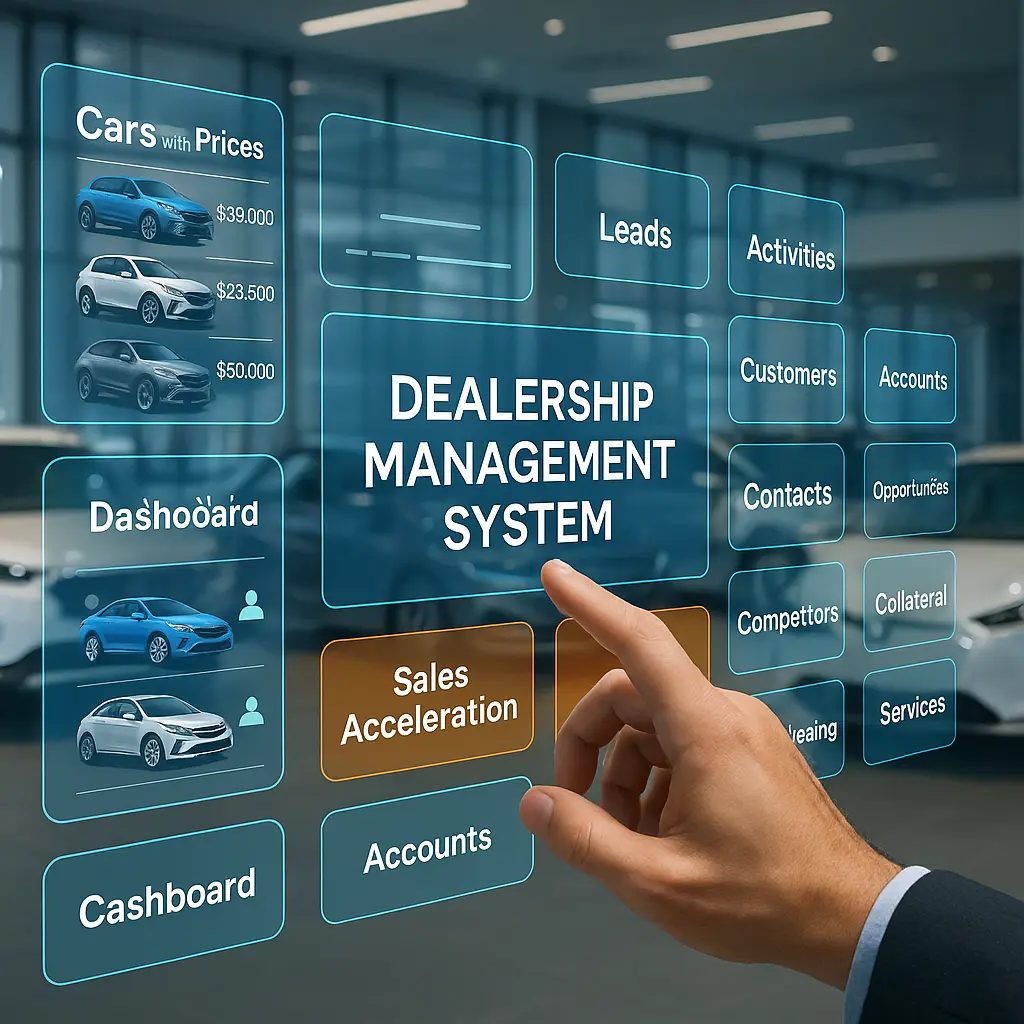
    A Dealership Management System (DMS) can be a transformational tool for Nepalese industries, especially in the rapidly growing automobile, electric vehicle (EV), and equipment sectors. As many businesses in Nepal still rely on manual records or fragmented software, a well-implemented DMS brings modernization, efficiency, and competitive advantage.

    Features of Dealership Management System (DMS)

    • Centralized Sales Tracking
    • Centralized Customer Support
    • Decentralized Leads

    A DMS enables centralized customer support by consolidating all customer interactions—whether from phone calls, emails, or walkins into one unified system. Support teams across locations can access complete customer histories, service records, and communication logs instantly. This ensures faster issue resolution, consistent responses, and a smoother experience regardless of which branch the customer contacts.

    Even when leads come from multiple sources showrooms, websites, social media, or agents in different cities, a DMS captures them all in one platform. Each branch or salesperson can manage their own leads independently while management gets a complete overview. This decentralized lead handling within a centralized system allows better follow-ups, accountability, and lead nurturing without losing track of potential customers.

    • Decentralized Services
    • Performance Sales Tracking
    • Goals and Targets

    With a DMS, service centers across different locations can operate independently yet remain connected. Job cards, service bookings, spare parts usage, and technician performance are managed locally but stored centrally. This ensures that customers can book service anywhere, and their records are available instantly—creating a seamless, brand-wide service experience.

    DMS provides real-time sales tracking dashboards that show individual, team, and branch performance. Managers can monitor sales targets, conversion rates, inventory movement, and customer response from a single interface. This transparency improves decision-making, motivates staff, and quickly identifies underperforming areas that need support or training.

    A DMS allows you to set sales goals, service targets, or revenue milestones at different levels—individual, team, or dealership-wide. You can track progress against those targets daily, weekly, or monthly. This keeps everyone aligned, focused, and accountable, while also providing insights to adjust strategies when goals are not being met.

  • DMS in Nepali Auto Workshops

    DMS in Nepali Auto Workshops

    Discover how Top Nepalese auto industries are increasing profitability and simplifying workshop operation.

    Introduction

    The automobile market is flourishing in Nepal, driven by high incomes, improved road infrastructure, and a young, aspirational consumer base. Growth is expected to exceed 13% through 2029. The market is experiencing a major transition into electric vehicles, with EVs making up 83% of total new car sales in 2023, up from 19% in 2018.The unprecedented levels of EV growth are backed by supportive policies from the government and a sizable demand from consumers.

    In total, the majority of the market is two-wheelers, and established brands like Honda, Yamaha, and Royal Enfield dominate the market. However, new upstart brands have begun gaining traction in EVs, especially with the younger generation. Brands such as BYD and TATA are gaining attention for their affordable, innovative, well-designed electric vehicles. These EV companies are using effective Dealer Management Systems (DMS) to enhance business processes and management to gain a competitive advantage.

    Why Nepali Auto Showrooms and Workshops Need a DMS ? 

    As Nepalese automobile market is growing quickly, which creates a highly competitive marketplace for workshops, and dealerships as they navigate the sea of changes. The lower middle class now consists of many of the newer vehicle owners and with a very noticeable shift occurring with electric vehicles creating a huge opportunity, growth is very much possible for companies in this space.

    The only barrier to claiming any part of the growing opportunity, is predicated on companies still functioning using manual processes / paperwork. Manual processes cause challenges that multiply the intensity of costly operational mistakes, revenue losses and other issues given the unique local conditions. For Nepali auto workshops, it is now time to adopt a localized modern Dealer Management System (DMS) for survival and success.

    The Dealer Management System (DMS) is the solution that drives many of the rapidly growing auto markets of Nepal and will enable further management of high customer demand. By using a DMS dealerships can leverage their operational capabilities through reduced manual capabilities and errors will maximize efficiency and improve overall productivity for staff while outlining workflows and providing accessibility to information.

    The High Expense of Manual Processes:

    Mistakes and Lost Revenue Without a centralized, automated system in place, auto workshops are rampant with organized chaos. This type of manual dependence has a high potential for errors that will eat into the bottom line.

    A Major Cause of Spare Parts Mismanagement: One of the biggest problems is control of inventory. Relying on ledgers or rudimentary spreadsheets to account for inventory is notoriously fraught with potential unreliability. Therefore issues occur as a result; ordering the incorrect parts, carrying excess obsolete stock that loses value, and losing the ability to locate making it possible to assemble all of the components needed to make a repair promptly.

    Shortening timelines for service became the end result and customers are more frustrated which erodes the potential of the workshop. In addition, complexity of the supply chain while wanting to distinguish between genuine and counterfeit parts made it a challenge as both scenarios result in potential harm to vehicle safety and the workshop.

    • Crippling Billing and Invoicing Issues: Nepal’s vehicle taxation system is complex at the best of times; multi-layered duties and taxes, which are subject to regular change. Manually calculating these on every invoice takes considerable time and is risky. A simple mathematical error can lead to under-billing that detrimentally impacts profit margins, or over-billing which irritates customers, leads to disputes, and reputational harm. More importantly, miscalculating tax can lead to charges later from the Inland Revenue Department (IRD) that could be financially disastrous.

    • Operational Inefficiency and Stagnation: Manual processes when creating and tracking job cards in addition to scheduling appointments and following up with customers, are all highly inefficient. In terms of time and true resources, those tasks take away from the employee time that can be spent on diagnostics, repairs, and customer service, the real revenue-generating work of the business. As a result, this inefficiency places a hard ceiling on the number of vehicles a workshop can service, limiting the growth potential for the shop as well.

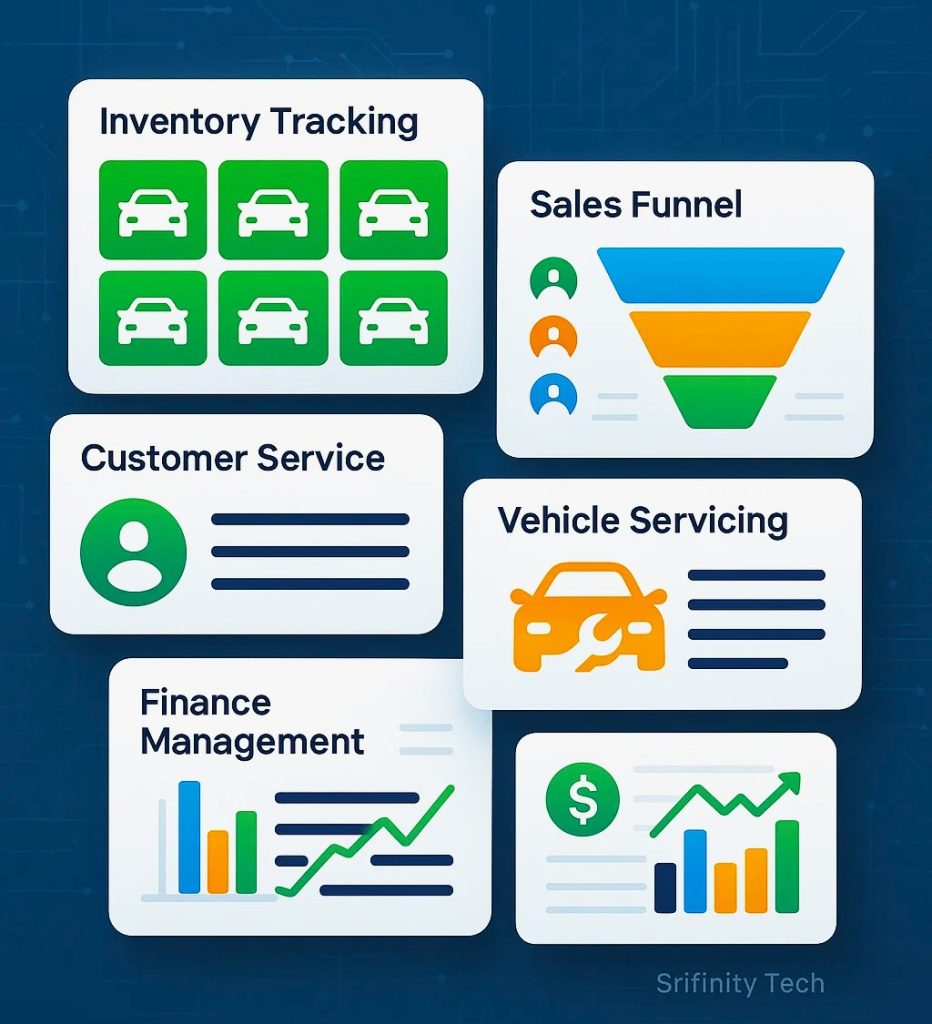
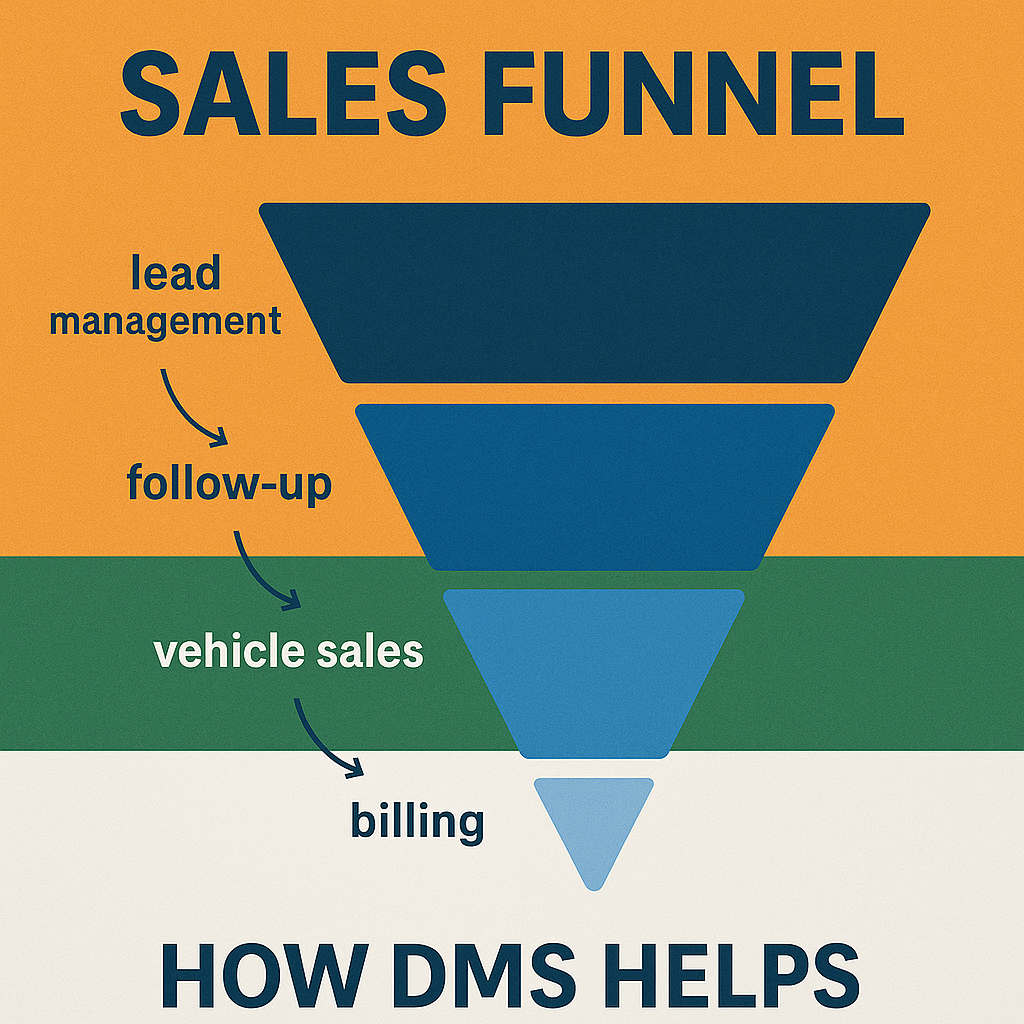
    Sales Funnel

    • Lead Management: Funnels leads from walk-ins, website forms, social pages, etc., and organizes them.Added leads are automatically saved to the DMS, assigned to sales, and reminders sent for lead follow up, eliminating lost opportunities.
    • Follow-Up: Following up with potential buyers; it’s either a call, a text, or email. DMS Automatically reminds sales folks when to follow-up, service dates due, or promotions to keep the lead warm.
    • Vehicle Sales: Prospect now buys.DMS Manages the vehicle sales, records of sales documents and price quotations. Instant access for Sales Reports and EMI options. The sales close quicker and more professionally.
    • Billing: Final billing, invoicing, and payment.DMS Automatic invoice, applies tax, updates inventory and records the transaction. Consuming time and reducing manual mistakes.

    Conclusion

    In the highly competitive and fast-paced automobile service industry of nepal there is nothing more quietly toxic to your time, money and customer trust than relying on outdated manual processes. Our localized intelligent DMS powered by Microsoft Dynamics 365, with implementation, support and operation from srifinity, aims to mitigate all these risks. Automated inventory management, service resourcing, tax compliant billing and actionable reporting. The system was specifically built for the unique needs of Nepali workshops. The industry knowledge, continuing support and technical experience of Srifinity allows auto workshops. to realize new levels of operational efficiency, profit and customer satisfaction. There is no better time to future proof your business and take control of your operations than now with Srifinity by your side.

  • Service Center Stress? Manage it with DMS !

    Service Center Stress? Manage it with DMS !

    How Dealership Management System Helps?

    We understand how hard is it to manage service centre, and to “Reduce stress at your service centre by automating repetitive tasks with a smart Dealership Management System. it not olny Saves time,but also boost your efficiency” in neumerous way, Before knowing how DMS system going to help, lets understand what a DMS simply means and How Dealership Management System Helps? To put it simply it is basically specialized software designed for auto dealerships and also service centers which helps to manage their day-to-day operations more efficientlywhich rise productivity. Service stations are more crowded than ever in the hub of Nepal’s rapidly expanding car sector. In order to fix cars, handle spare parts, keep track of job cards, soothe upset clients, and make sure nothing gets lost, managers and mechanics work very hard every day. But let’s face it: chaos is a common visitor when everything is done by hand.  

    Does that sound familiar? You’re not only under stress if your workshop is still operating solely on paper, Excel sheets, and memory, but you’re also losing money.

    In 2025, smart workshops all over Nepal will switch to Dealer Management Systems (DMS) to handle their daily problems. Whether you run a neighborhood garage in Butwal or a branded dealership in Kathmandu, a DMS is your one-stop shop for streamlining, developing, and simplifying your business.

    Let’s explore how.

    The Actual Challenges of Nepal’s Manual Workshop Operations

    Manually operating an auto repair shop may seem familiar, but it’s not very effective.

    • Lost job cards result in a service history that is unclear.
    • Customer complaints and delays are caused by unclear technician schedules.
    • Inventory mismanagement leads to shortages of parts or overordering.
    • Billing errors annoy customers and damage credibility.
    • Failure to send out service reminders leads to missed repeat business.
    • Without any real-time insights, you’re flying blind. 

    Poor client experiences, lost revenue, and wasted time are the outcomes of all these issues. That is risky in a market as competitive as Nepal’s

    What Is

    Dealer Management System (DMS)?

    A Dealership Management System (DMS), assists automobile dealerships and workshops with their daily management tasks. Businesses can better control their operations through a single system that connects multiple areas of the dealership. This brings efficiency, better customer service and overall performance.

    From the front desk to the repair bay, a DMS is a cloud-based software program that automates and integrates every aspect of your dealership or service center.Specifically for workshops, a DMS helps you:

    • Make and maintain electronic job cards
    • Keep track of each customer’s past auto repairs.
    • Organize technician tasks effectively.
    • Track the availability of spare parts in real time.
    • Create precise invoices that include VAT.
    • Provide automated service updates and reminders.
    • Analyze workshop performance through detailed dashboards and reports.

    With the help of Microsoft products like Dynamic 365 it will help to not olny boost the business performance but also helps to be secure for future. Think of it as a powerful assistant who never forgets, never makes errors, and works 24/7. To know more about Microsoft Benefits to business automation, Here is the site of Microsoft and its benefits to businesses

    7 Game-Changing Benefits of DMS for Workshops in Nepal

    1.  Digital Job Cards – No More Lost Paperwork

    Forget about the mess caused by job cards that are smudged, missing, or incomplete. Digitally creating job cards, connecting them to clients and vehicles, and tracking them through to completion are all made possible by a DMS. You can access your entire history from anywhere at any time.

    2. Smart Technician Scheduling

    A DMS assists you in allocating tasks to technicians according to their workload, skill level, and availability. This guarantees that every task is finished on schedule and prevents wasted time and overwork. Moreover, you will keep track of who completed what and how long it took.

    3.  Spare Parts Inventory That Actually Works

    No more questioning if a part is available. A DMS tracks every part used in every job, helps you automatically reorder when stocks are low, and provides you with real-time inventory updates. Delays, hoarding, and waste are avoided in this way. 

    4.  Instant Invoicing with Zero Errors

    Manual bills lead to miscalculations, missing charges, and tax problems. A DMS calculates parts, labor, VAT, and discounts automatically — generating clean, professional invoices in just a few clicks. Faster billing means faster payments.

    5.  Stay in Touch with Automated Reminders

    A DMS can notify clients via SMS, email, or WhatsApp when a car is ready for pickup or when a routine service is due. This lessens the workload for your team, fosters loyalty, and increases repeat business.

    6.  Reports That Drive Better Decisions

    Are you trying to find the most efficient mechanic? What are the most profitable services? When are your busiest times? Real-time analytics on every facet of your workshop are provided by a DMS. Instead of only speculating, you’ll make more informed choices. 

    7.  Cloud-Based & Mobile Friendly

    Your DMS data is safe, secure, and available from any location when stored on the cloud. Numerous systems also provide smartphone apps, allowing you to keep an eye on your workshop from anywhere in the valley.

    Why DMS Adoption Is Booming in Nepal ?

    Workshops that don’t change run the danger of becoming outdated. However, those who digitize now get the professionalism, quickness, and clarity that contemporary consumers demand.Nepal’s automobile market is evolving rapidly:


    Actually, a number of leading dealerships and repair facilities in Kathmandu, Pokhara, and Chitwan have already made the transition, using DMS to improve customer service, increase sales, and accelerate expansion.

    Nepal’s automobile market is evolving rapidly:

    • Increased competition among workshops and dealerships
    • More vehicle ownership across cities and towns
    • Booming EV segment, requiring specialized tracking
    • Rising customer expectations for quick, transparent service

    Choosing the Right DMS for Your Workshop

    Not all DMS platforms are equally suited for servicing workshops in Nepal. The right DMS went beyond just the needs of workshop operations (sales is not enough), but was able to support the workflows of workshop operations, the Nepali language, and regional tax billing compliance. Ideally the platform would incorporate features like job cards,Automotive Service Software, Garage management system, CRM, inventory control, invoicing, etc. .

    The platform should be mobile, because the teams are always on the move. Access to consistent and reliable local training and support is critical, as is a platform that is affordable and has ability to grow with your business. This is why Srifinity DMS, is a platform build for Nepal, and excels in this domain.

    Optimizing operations, boosting profitability, and improving customer satisfaction, all these depend on choosing the right Dealership Management System (DMS). A good DMS helps with not just making better decision-making but also tracking performance by providing centralized control over customer, inventory, sales, and service data. It gives the dealerships real-time insights,that  reduces errors, and lessens manual work, that will  allow them to respond quickly to the  market changes.


    Additionally, the right system which supports scalability and integration with other platforms, enabling companies to grow and adjust. In today’s competitive market, a solid DMS with Srifinity we help in strategic assets management that fosters long-term success and efficiency, rather than just being a simple tool.

    contact us to know more